Category: Traveling deep in Korea

  • Korea Grand Sale 2026 – Your Essential Winter Shopping Guide

    (Dec 17, 2025 – Feb 22, 2026)

    Many winter travelers think Korea slows down once the weather gets cold, but every year the Korea Grand Sale transforms the winter season into one of the most exciting times to visit. Launched to encourage tourism during the off-peak months, the nationwide festival brings massive discounts, cultural programs, and exclusive benefits tailored for foreign visitors. Running for 68 days from December 17, 2025 through February 22, 2026, this year’s edition expands both in duration and participating businesses, making it the largest Korea Grand Sale yet.


    1. What Makes the Korea Grand Sale Special?

    The festival has grown into Korea’s signature shopping tourism event, now supported by the Ministry of Culture, Sports and Tourism and the Visit Korea Committee. More than 1,750 companies across airlines, hotels, department stores, duty-free shops, convenience chains, attractions, and beauty services participate nationwide. From booking your flight to buying cosmetics downtown, visitors can unlock perks at nearly every stage of the trip.


    2. Huge Flight and Accommodation Discounts

    One of the most attractive benefits is discounted airfare. Ten major airlines, including Korean Air, will provide up to 96% off on international routes flying into Korea. Hotels are also joining with bundled cultural experiences: free ice-rink access at Banyan Tree Club & Spa Seoul, integrated palace admission tickets, K-beauty packages offering prepaid cosmetic cards, and other themed stays that combine accommodation with hands-on activities.


    3. Shopping Benefits: Duty-Free, Outlets, and Convenience Stores

    Department stores, duty-free shops, outlets, supermarkets, and convenience stores will offer expanded promotions for foreign customers. Benefits include gift vouchers based on purchase amounts, instant discount coupons, store-specific welcome gifts, and membership upgrades. Some platforms in partnership—such as Musinsa Standard or CJ Olive Young—will feature up to 90% discount events, plus exclusive items and trial programs available only during the sale.

    4. Easy Tourist Payment and Instant VAT Savings

    Foreign-friendly payment platforms like UnionPay and WOWPASS provide instant tax refunds and additional immediate discounts up to around 15% at participating stores. This means visitors can save money during checkout without extra steps or waiting for refunds at the airport.


    5. Experience-Based K-Lifestyle Programs

    Beyond discounts, this year’s edition expands cultural elements to reflect the increasing demand for experiential tourism. Programs fall under five lifestyle themes:
    K-Gourmet: food tastings and culinary experiences
    K-Exciting: entertainment and activities
    K-Stylish: beauty and fashion programs
    K-Healing: wellness and relaxation events
    K-Inspired: arts, heritage, and culture exhibitions

    Whether it’s beauty demonstrations, palace experiences, or Korean food tastings, these programs add a cultural dimension to shopping trips.


    Takeaway

    If you’re planning a winter trip to Korea, the Korea Grand Sale provides one of the best opportunities to stretch your travel budget while enjoying K-culture more deeply. From discounted flights and hotel packages to K-beauty shopping and cultural experiences, the 2026 edition brings together savings and creativity on a national scale.

    Checking sale benefits while planning your itinerary can make your winter journey smoother, more affordable, and full of memorable discoveries.
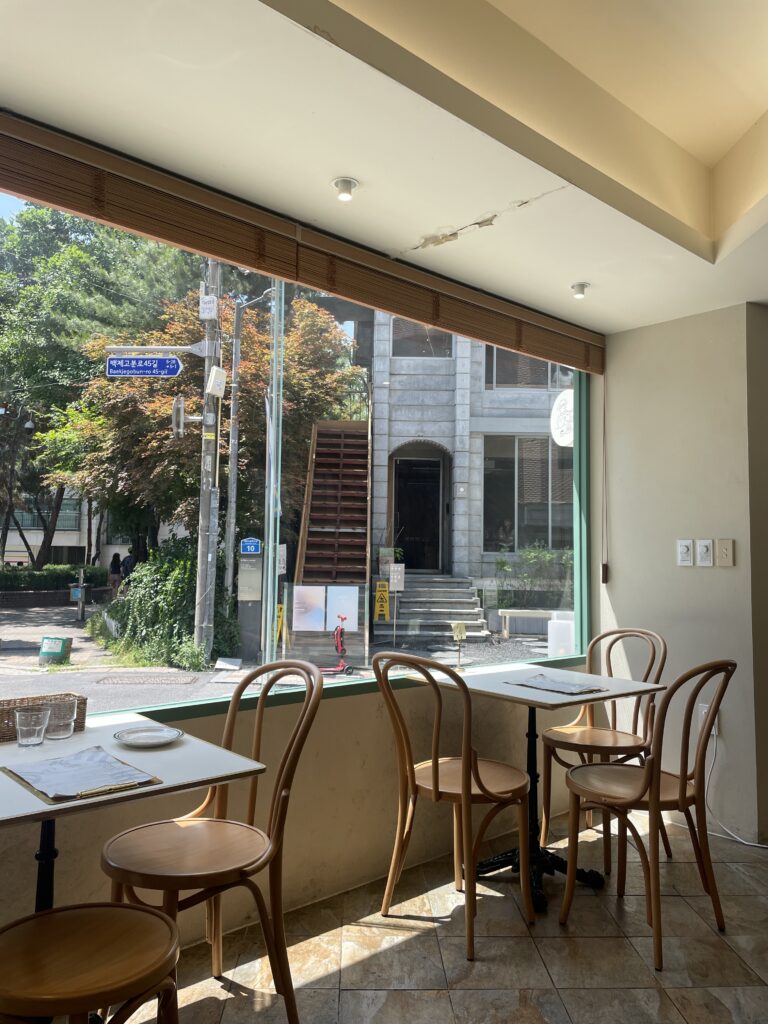

  • More Than Coffee: A Foreigner’s Guide to Korean Café Culture

    1. Cafés as everyday living rooms
    In Korea, cafés are not just places to grab coffee—they function as extended living rooms, study halls, and casual meeting spaces. It’s common to see people spending hours in a café reading, working, studying for exams, or quietly chatting with friends. Ordering a single drink and staying for a long time is generally accepted, especially on weekdays, which often surprises visitors from countries where cafés prioritize faster turnover.

    2. Saving seats with personal belongings
    One of the most striking aspects of Korean café culture for foreigners is how people save seats. It’s not unusual to see a table “reserved” with a smartphone, wallet, laptop, or even a bag left unattended while the owner goes to order. This practice reflects Korea’s relatively low rate of pickpocketing and strong social norms around respecting others’ property. While visitors may feel uneasy doing this at first, it is a widely accepted and trusted custom in everyday Korean life.

    3. Order first, then find a seat
    In most Korean cafés, the unspoken rule is to order first and then take a seat, even if the café looks crowded. Staff rarely assign seating, and customers are expected to manage this themselves. This is why saving a table with personal items before ordering is so common. During peak hours, this system helps avoid confusion and keeps lines moving efficiently.

    4. Self-service culture and tray return
    Another distinctive feature is the self-service mindset. When you finish your drink, you’re usually expected to return your tray, cups, and trash to a designated return station. This applies even in stylish or minimalist cafés. Cleaning up after yourself is seen as basic courtesy rather than extra work, and most Koreans do it automatically without prompting.

    5. Ice, Wi-Fi, and practical comforts
    Korean cafés are highly optimized for comfort. Iced drinks—especially iced Americanos—are popular year-round, even in winter. Free Wi-Fi and easily accessible power outlets are common, making cafés ideal for remote work or studying. Many cafés also focus heavily on interior design, treating the space itself as part of the experience, which explains why café-hopping is a popular weekend activity.

    Taken together, Korean café culture reflects broader social values: trust, efficiency, and shared responsibility. For foreigners, understanding these small but meaningful customs—like seat-saving with a phone or returning your cup—offers a deeper glimpse into how everyday life in Korea quietly runs on mutual respect.

  • From Grandma’s Closet to Global Trend: Why Korea’s Kimjang Vest Is Everywhere This Winter

    1. From kimchi-making gear to fashion icon: the rise of the kimjang vest
    In recent years, Korea has seen a surprising fashion revival centered on the kimjang vest—a lightly padded, floral-patterned vest traditionally worn during kimchi-making season. What was once considered purely functional, and even a bit old-fashioned, has now become a trend leader among the MZ generation. This shift is closely tied to the broader rise of “Grannycore”, a style movement that reinterprets grandmother-era clothing as warm, nostalgic, and charming rather than outdated.

    Floral kimjang vests worn by Korean celebrities—once purely practical winter wear, now a Grannycore fashion icon loved by both locals and foreign visitors.

    Data backs this up: searches for “kimjang vest” increased more than fivefold in a single month, and the item has even ranked among top sellers on youth-oriented shopping platforms.

    2. Why MZ loves it: nostalgia, comfort, and price
    The appeal of the kimjang vest is surprisingly practical. Designed to withstand cold kitchens during winter kimchi preparation, it features a quilted structure, warm inner lining, and a loose silhouette that makes layering easy. For younger consumers, the “cheerfully tacky” floral patterns and oversized fit feel cozy rather than awkward.

    Just as important is the price: at traditional markets like Namdaemun and Dongdaemun, kimjang vests are often sold for around 5,000 KRW, while street stalls in areas like Myeongdong or Seongsu usually price them between 10,000–20,000 KRW. Even Daiso sells kimjang vests for about 5,000 KRW, making them one of the cheapest ways to participate in a uniquely Korean fashion trend.

    3. Celebrity influence and global spread
    The kimjang vest’s leap from local markets to global visibility was accelerated by celebrities. K-pop stars such as Jennie (BLACKPINK), Karina (aespa), and even G-Dragon have been spotted wearing floral padded vests, instantly reframing the item as stylish rather than purely nostalgic. Once these images spread on social media, foreign fans began actively looking for “that Korean grandma vest” during their trips to Seoul. Japanese and European tourists, in particular, have embraced the kimjang vest as a playful symbol of everyday Korean life—something locals actually wear, not just a souvenir.

    4. A perfect souvenir (even for dogs)
    Another reason for its popularity among travelers is how gift-friendly it is. Lightweight, inexpensive, and available in endless colors, kimjang vests are easy to buy in multiples—many shoppers pick up several at once for family or friends.

    There are even kimjang vests designed for dogs, which makes them a memorable and humorous gift for pet lovers. In that sense, the kimjang vest has become more than clothing; it’s a small, wearable piece of Korean daily culture that blends warmth, humor, and nostalgia.

  • Why Korea Is a Global Hub for Medical Tourism: Affordable World-Class Care Meets K-Culture in Seoul

    Korea has quietly become one of the world’s most attractive destinations for medical tourism, and the reason is simple: top-tier medical services at remarkably affordable prices, combined with a travel experience that goes far beyond hospitals and clinics. Today, medical tourism in Korea is no longer just about treatment—it is about beauty, recovery, culture, and lifestyle, all seamlessly woven into one trip.

    At the heart of this trend is Korea’s globally recognized strength in dermatology and plastic surgery. These fields consistently rank at the top of foreign medical spending, reflecting Korea’s reputation for advanced technology, skilled specialists, and refined aesthetic sensibility. What makes Korea stand out, however, is that this level of care comes at a fraction of the cost found in many Western countries, without compromising quality or safety.

    But Korea’s appeal goes far beyond medical procedures alone. Unlike traditional medical tourism destinations, Korea offers a fully integrated experience. Visitors often combine medical appointments with skincare shopping, K-beauty treatments, wellness programs, and even K-POP-inspired experiences. It is not uncommon for patients to attend concerts, visit filming locations of Korean dramas, or enjoy traditional cultural activities while recovering. This unique combination turns medical travel into a well-rounded lifestyle journey rather than a purely clinical visit.

    Seoul: The Center of Korea’s Medical Tourism

    Within Korea, Seoul dominates the medical tourism landscape, accounting for the vast majority of foreign medical spending. The city’s infrastructure, accessibility, and concentration of top hospitals and clinics make it the natural first choice for international patients. Medical services here are tightly connected with shopping, dining, and accommodation, creating a smooth and comfortable experience even for first-time visitors.

    Why Gangnam and Apgujeong Are Ideal for Medical Travelers

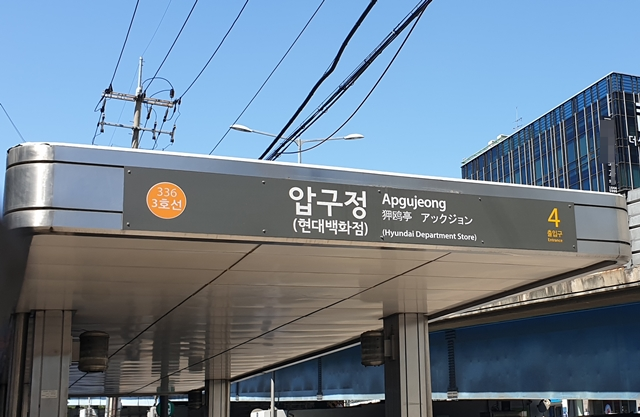
    Among Seoul’s districts, Gangnam and Apgujeong stand out as the most popular areas for medical tourists—and for good reason. These neighborhoods are home to hundreds of specialized dermatology and plastic surgery clinics, many of which cater specifically to international patients with multilingual staff and concierge-style services.

    Gangnam an Apgujeong are two of the ideal areas for medical travelers in Seoul.

    Beyond medical facilities, Gangnam and Apgujeong offer everything a medical traveler might need: luxury hotels, serviced residences, high-end department stores, and countless cafés and restaurants suitable for recovery-friendly meals. The areas are walkable, safe, and designed around convenience, making them ideal for short-term stays as well as longer recovery periods.

    A Destination That Blends Care, Beauty, and Culture

    What truly sets Korea apart is how naturally medical care blends with everyday life and culture. Patients can move effortlessly from a clinic appointment to a skincare flagship store, from a recovery café to an art gallery, and from a wellness spa to a cultural landmark—all within the same neighborhood. This layered experience is difficult to replicate elsewhere and is a major reason why repeat visits are so common.

    As global interest in wellness, beauty, and preventative care continues to grow, Korea’s medical tourism model offers a compelling blueprint. High-quality healthcare, transparent pricing, cultural richness, and urban convenience come together in a way that feels both efficient and enjoyable.

    For travelers considering medical tourism, Korea—and especially Seoul’s Gangnam and Apgujeong districts—is not just a place to receive treatment. It is a destination where healthcare meets lifestyle, and where a medical trip can feel like a thoughtfully curated journey into modern Korean culture.

  • Seoul Plaza Ice Skating Rink: Best Winter Experiences in Seoul (Ice Skating in Seoul)

    If you’re spending winter in Seoul, there’s one seasonal experience that locals and visitors alike look forward to every year: the Seoul Plaza Ice Skating Rink right in front of City Hall. Affordable, atmospheric, and incredibly central, this open-air rink has quietly become one of Seoul’s most beloved winter traditions—and it’s back again this season.

    A Classic Seoul Winter Experience, Right in the City Center

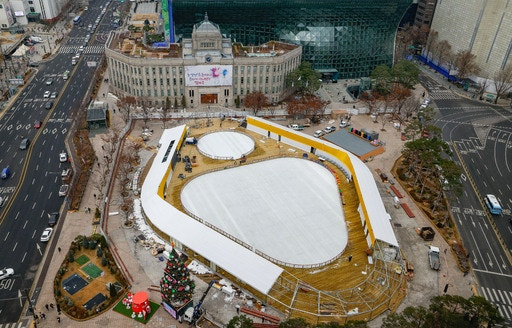
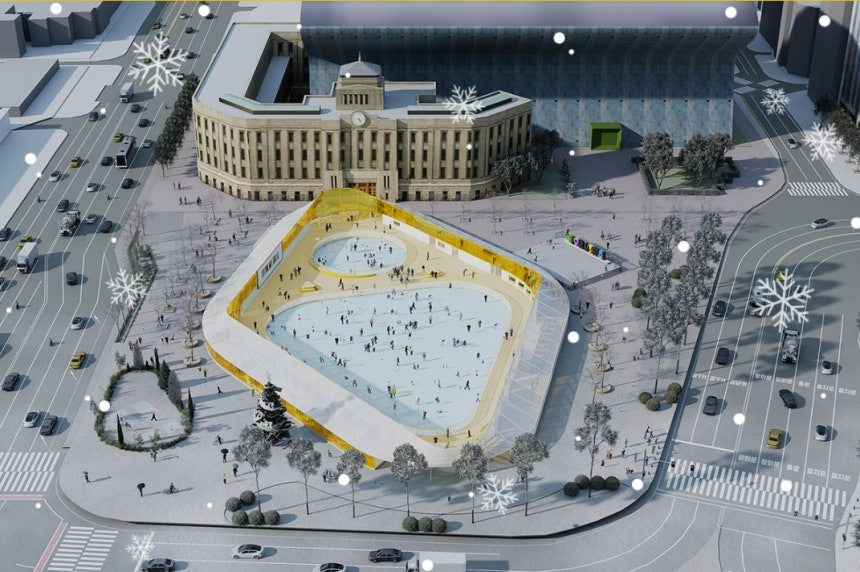
    The Seoul Plaza Ice Skating Rink opens for its 19th winter season on December 19, transforming the plaza in front of Seoul City Hall into a lively winter playground. The rink will be open for 52 days, until February 8, making it a perfect stop whether you’re visiting Seoul for a short trip or spending the entire winter here. Few cities offer ice skating in such a dramatic urban setting, with historic buildings, modern offices, and festive lights all around you.

    Skating for Just 1,000 Won

    One of the most surprising things for first-time visitors is the price. Since its opening in 2004, the admission fee has remained just 1,000 KRW, including skate rental. In a city where winter activities can add up quickly, this makes Seoul Plaza Ice Skating Rink one of the most budget-friendly experiences you’ll find. The rink operates from 10:00 AM to 9:30 PM, and stays open even later—until 11:00 PM on Saturdays and public holidays.

    This Year’s Theme: “Wintering”

    For this season, the rink is designed around the theme “Wintering,” focusing on warmth and brightness despite the cold weather. The plaza is wrapped in a glowing diamond-shaped ring of soft yellow lights, creating a cheerful and welcoming atmosphere that feels especially magical after sunset. Even if you don’t skate, it’s worth visiting just to enjoy the scenery and take photos.

    Opening Ceremony and Special Guests

    The opening ceremony on December 19 at 5:00 PM will feature a percussion performance, a celebratory figure skating show, and appearances by notable guests—including Cha Jun-hwan, Korea’s star figure skater, and Shim Suk-hee, a short-track speed skating legend and Olympic Gold Medalist preparing for the upcoming Winter Olympics. It’s a rare chance to see top Korean winter sports athletes up close in a casual, public setting.

    More Than Skating: Winter Programs at Seoul Plaza

    Skating is only part of the experience. From January 31 to February 7, visitors can explore interactive promotion booths for luge and bobsleigh, two Winter Olympic sports that many people have never seen in person. You’ll be able to view real equipment and learn how these high-speed sports work.

    The plaza also hosts a Local Market Zone, expanded from last year’s direct farmers’ market. Vendors from Gunsan City in Jeollabuk-do will sell local agricultural products, snacks, and comfort food—perfect for warming up after skating.

    Things to Know Before You Go

    Because it’s an outdoor rink, operations may pause due to heavy snow, rain, or poor air quality, so it’s a good idea to check the official Seoul city website before heading over. Dress warmly, wear gloves, and plan to arrive a bit early during peak evening hours, especially on weekends.

    Why Ice Skating in the heart of Seoul is a Worthwhile Experience

    The Seoul Plaza Ice Skating Rink captures something very special about winter in Seoul: it’s communal, affordable, and right in the heart of the city. Whether you’re a confident skater or stepping onto the ice for the first time, this is one of those seasonal experiences that helps you understand how Seoul celebrates winter—together, outdoors, and with a surprising amount of charm.

  • Beyond Shin Ramyun and Buldak: 5 Korean Cup Ramyeon Foreign Travelers Should Try in Korea

    If you have traveled even a little, chances are you have already seen Shin Ramyun and Buldak Bokkeum Myun on supermarket shelves around the world. They are iconic—almost symbolic—of K-ramyeon. But because they are now available almost everywhere, many travelers visiting Korea start to wonder: Is there a ramyeon I can try that actually feels special to Korea itself?

    If you want to go deeper into everyday Korean food culture, convenience-store cup ramyeon is the perfect place to start. Affordable, easy to find, and surprisingly diverse, here are five Korean cup ramyeon that locals casually enjoy—and that curious travelers should absolutely try while in Korea.

    1. Yukgaejang Cup (육개장 사발면) – A Local Classic with Unique Noodles

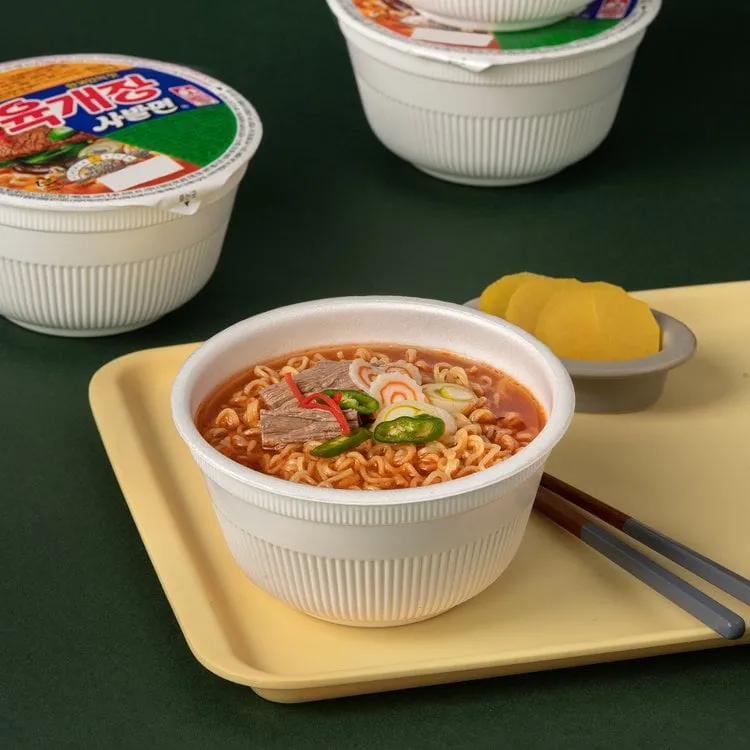
    Yukgaejang Cup is one of the most iconic cup ramyeon in Korea, especially as a late-night snack or a quick meal. What really sets it apart is its thin yet chewy noodles, which feel noticeably different from the thicker noodles found in many exported ramyeon products. The broth is mildly spicy and savory rather than aggressively hot, making it easy to enjoy even if you are not used to Korean spice levels.

    There is also a Kimchi Yukgaejang Cup version, which adds a slightly tangy kick and is just as popular among locals.

    2. Chamkkae Ramyeon (참깨라면) – Perfect for Lovers of Nutty, Savory Flavors

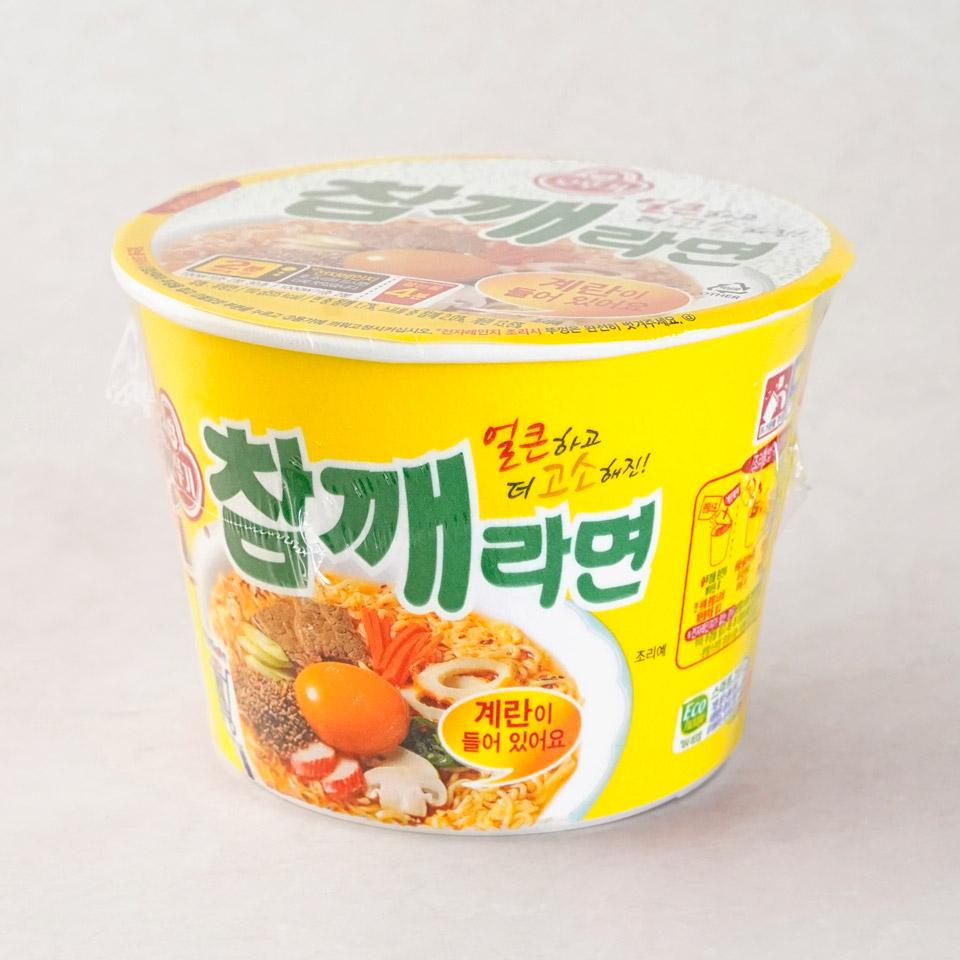
    Chamkkae Ramyeon literally means sesame ramyeon, and its defining feature is the roasted sesame topping and egg garnish that floats on top of the soup. As soon as you pour in hot water, a rich, nutty aroma fills the air. This ramyeon is less about spice and more about comfort and depth, making it ideal for travelers who enjoy warm, savory flavors. If you like sesame oil, toasted nuts, or creamy broths, this cup ramyeon is an easy recommendation.

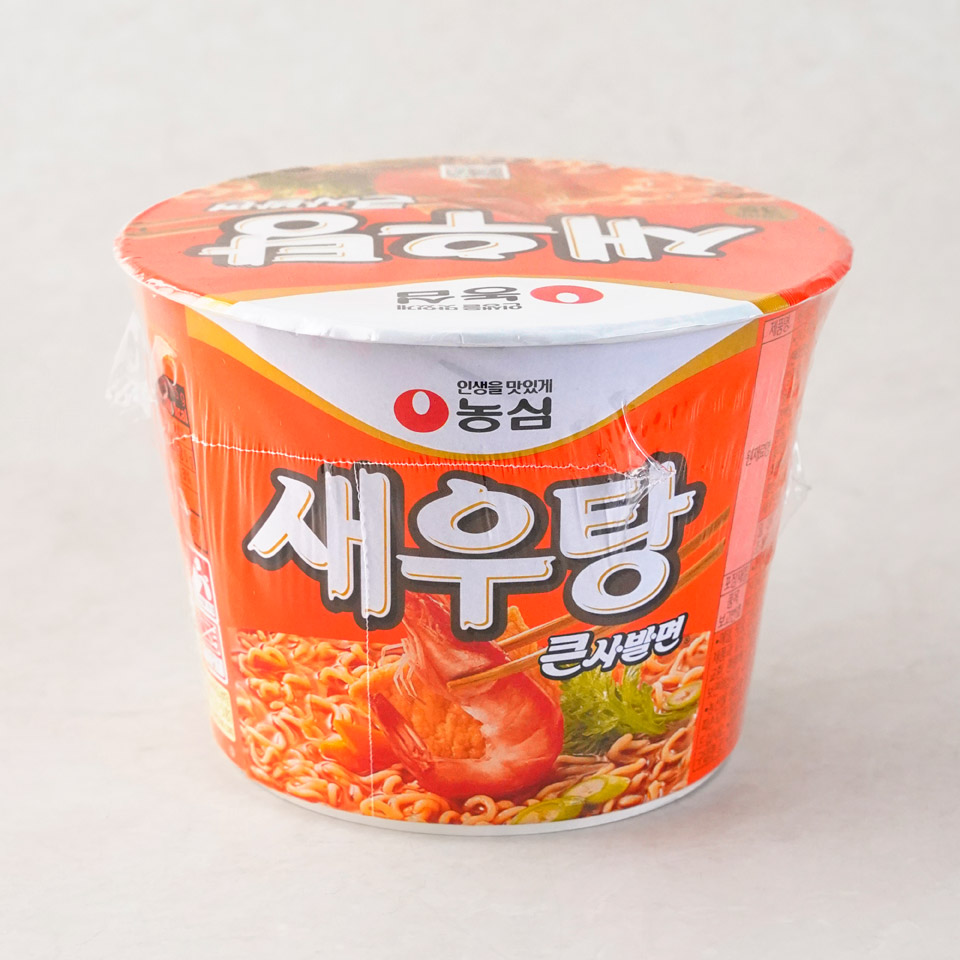
    3. Saewoo Tang (새우탕) – A Seafood-Forward Korean Favorite

    Saewoo Tang stands out for its distinct shrimp-based aroma, inspired by dried seafood commonly used in Korean cooking. The flavor is gentle but unmistakably seafood-focused, making it a great choice if you enjoy anchovy broth, shrimp snacks, or dried fish. Many Koreans associate this cup ramyeon with childhood memories, which gives it a nostalgic charm. For foreign travelers, it offers a different side of Korean ramyeon beyond beef or chili flavors.

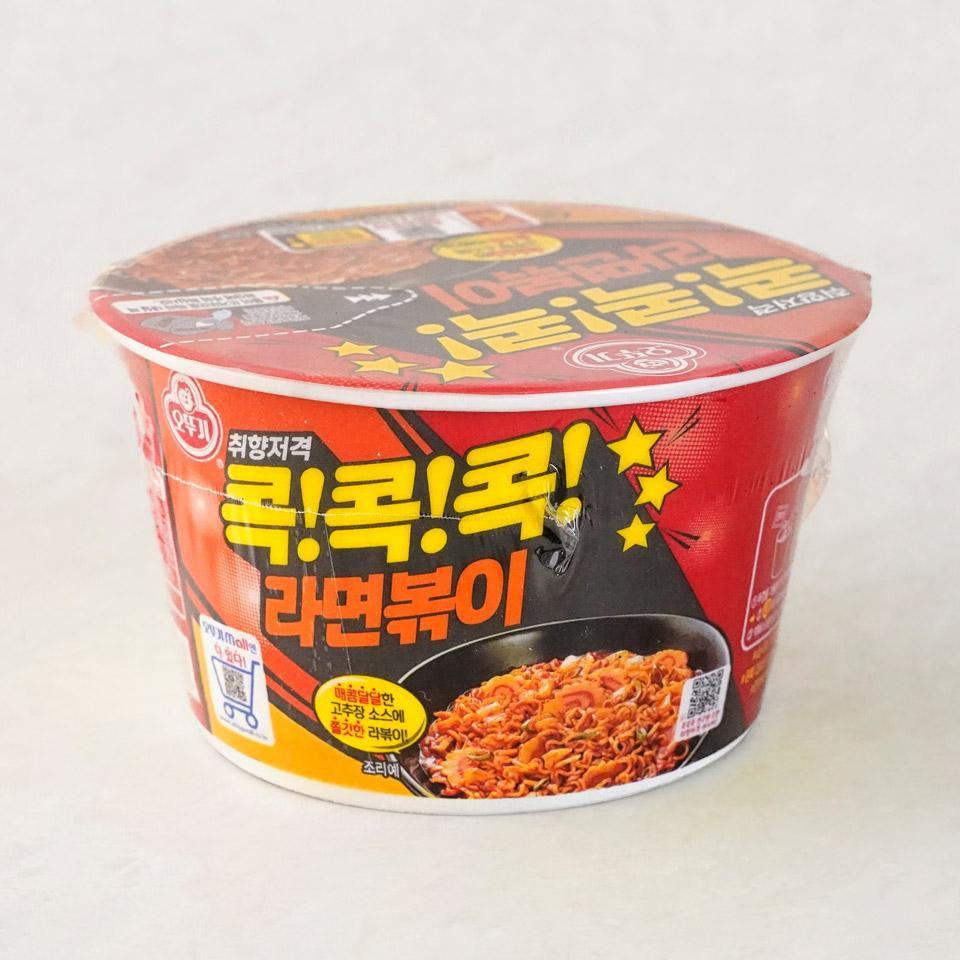
    4. Ramyeon Bokki (라면볶이) – Stir-Fried Style and Light to Eat

    Unlike most cup ramyeon, Ramyeon Bokki is a stir-fried style dish. After cooking the noodles, you drain most of the water and mix in the sauce, resulting in a bold but lighter meal with no soup. It delivers strong ramyeon flavor while feeling less heavy, which makes it popular for quick snacks or meals between sightseeing stops. If you want something flavorful but not filling, this is a very practical choice.

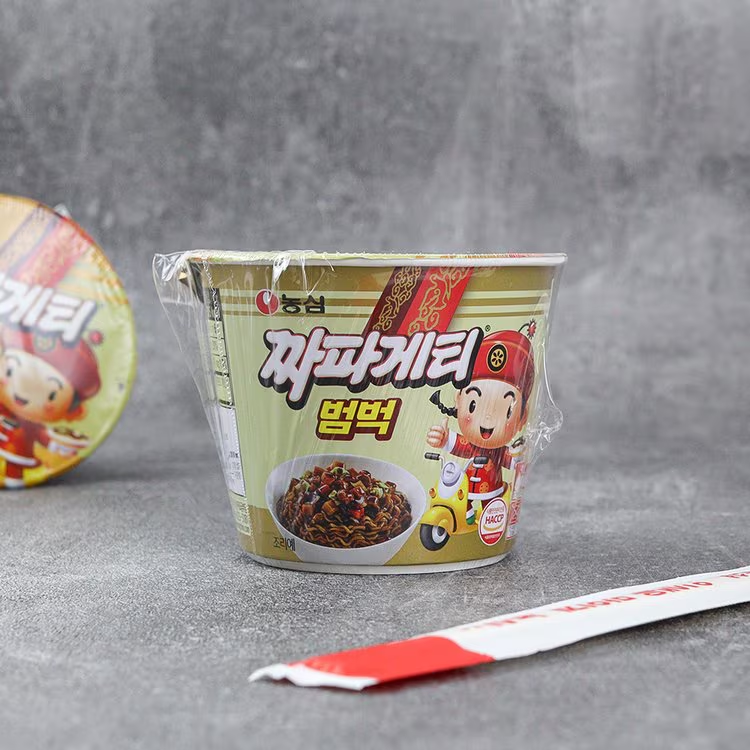
    5. Jjapagetti Beombuk (짜파게티 범벅) – Korean Black Bean Ramyeon Made Simple

    Jjapagetti is Korea’s famous black bean ramyeon, inspired by jajangmyeon but adapted into an instant format. The Beombuk version is designed for convenience, focusing on the sweet-savory black bean sauce without complicated steps.

    It is rich, comforting, and completely non-spicy, making it a great option if you want a break from chili-based ramyeon. For many foreign visitors, this becomes their first introduction to Korea’s black bean noodle culture.

    Why Cup Ramyeon Is Worth Trying in Korea

    Cup ramyeon is more than just a quick meal—it is a window into everyday Korean life. These are flavors that locals grow up with, often eaten at convenience stores, offices, or late at night.

    While Shin Ramyun and Buldak Bokkeum Myun introduced the world to K-ramyeon, these cup ramyeon show how Koreans actually enjoy it day to day. If you want to experience Korea a little more deeply, starting with a cup of ramyeon is a surprisingly good place to begin.

  • KTX to Haeundae: Seoul–Busan Travel Just Got Much Easier for Foreign Visitor


    For many foreign travelers, taking the KTX from Seoul to Busan was fast—but not necessarily convenient. While the train ride itself was smooth, arriving at Busan Station often meant another 50 minutes to an hour of subway or taxi travel to reach Haeundae or Gwangalli, where most visitors actually stay. After a long journey with luggage, that final transfer was often the most exhausting part of the trip and a common reason why Busan felt slightly less accessible than it should have been.

    What’s Changed: KTX-Eum Now Stops Near Haeundae and Gwangalli
    That extra step is now being removed. KTX-Eum trains on the Jungang Line (Cheongnyangni–Bujeon) will begin stopping at Shin-Haeundae Station, Centum Station, and Gijang Station. Shin-Haeundae Station will have up to four trains in each direction per day, while Centum and Gijang Stations will each have one stop per direction. Instead of passing through downtown Busan first, travelers can now arrive much closer to Busan’s most popular beachside neighborhoods.

    Why This Matters for Foreign Travelers
    Haeundae and Gwangalli are two of the most foreigner-friendly areas in Busan, known for beaches, cafés, nightlife, luxury hotels, and easy access to attractions like BEXCO and Marine City. Direct KTX access to nearby stations means fewer transfers, less confusion, and a smoother first impression of the city. For first-time visitors to Korea, this makes Busan feel far less intimidating and much easier to include in a short itinerary.


    The improvements go beyond station locations. With upgrades to the signal system on parts of the route, the fastest travel time between Cheongnyangni and Bujeon has been reduced to about 3 hours and 38 minutes—roughly 18 minutes shorter than before. Daily KTX-Eum services on this line have also increased from 6 to 18, giving travelers more flexibility when planning weekend trips or last-minute getaways from Seoul.

    A New Way to Plan Your Busan Trip
    Until now, most itineraries were built around arriving at Busan Station and moving outward. With KTX-Eum stopping closer to Haeundae and Gwangalli, that logic flips. Travelers can now plan accommodation, cafés, and beach time around where the train drops them off, not the other way around. For visitors focused on coastal scenery, food, and a relaxed city vibe, this change quietly but fundamentally improves the Busan experience.

    If you enjoy traveling deeper into Korea without unnecessary friction, this is exactly the kind of change that matters. With easier access to its most iconic neighborhoods, Busan is now more inviting than ever for foreign travelers looking to experience Korea beyond Seoul, one smooth train ride at a time.

  • Ice Skating in the Heart of Seoul: Seoul Plaza Rink Returns This Winter

    If you want to experience a real Seoul winter moment, there’s no place quite like the Seoul Plaza Ice Skating Rink, right in front of Seoul City Hall. Every winter, the busy civic square transforms into an outdoor ice rink surrounded by historic buildings, office towers, and glowing city lights—creating a uniquely urban winter atmosphere that locals and visitors love.

    1. When Is the Seoul Plaza Ice Rink Open?

    This winter, the Seoul Plaza Ice Skating Rink will operate from December 19, 2025 to February 8, 2026.
    From Sunday to Friday, sessions run between 10:00 a.m. and 9:30 p.m., while Saturdays and public holidays extend until 11:00 p.m. Each skating session lasts 1 hour, followed by a 30-minute ice maintenance break.

    2. How Much Does It Cost?

    One of the biggest surprises for foreigners is the price.
    A one-hour session costs only KRW 1,000 (less than USD 1), and that price already includes skate rental and a helmet. The fee has remained unchanged since the rink first opened in 2004, making it one of the best winter bargains in Seoul.

    3. How to Make a Reservation (Strongly Recommended)

    Reservations open on December 16, and each session accepts 600 skaters—300 online and 300 on-site, first come first served. Online reservations open 7 days before your chosen date and are highly recommended, especially on weekends and during the year-end holiday season. Popular time slots often sell out quickly.

    You can book through:

    • Official website: seoulskate.kr
    • Ticketlink: ticketlink.co.kr

    If you plan to buy tickets on-site, arriving at least one hour earlier than your preferred session is a smart move.

    4. Location & How to Get There

    The rink is extremely easy to reach. It’s located at Seoul Plaza, just a 1-minute walk from City Hall Station (Subway Lines 1 and 2), Exits 5 or 6. Its central location makes it perfect to combine with sightseeing (Cheonggyecheon, Gyeongbokgung Palace, etc.), shopping, or dinner nearby.

    5. What to Wear and Bring

    Gloves are mandatory, so make sure to bring your own. A warm hat that covers your ears, thick socks, and winter clothing are strongly recommended since this is an outdoor rink. Even if you’re skating actively, Seoul winters can get cold—especially after sunset.

    6. Facilities and Beginner-Friendly Features

    The rink is well-equipped with lockers, a café, rest areas, and snack stands. There’s also a medical station for minor injuries. Beginners are welcome, and skating lessons are available, including small-group lessons (up to 3 people) and group classes held on weekdays. Personal skates are allowed (except speed skates), but hockey helmets are not permitted.

    7. A Winter Spot Loved by Foreign Visitors

    Seoul Plaza Ice Rink has become a true winter landmark. Last season alone, nearly 170,000 people visited, with foreign visitors making up a rapidly growing share. The mix of locals skating after work, students on winter break, and tourists trying ice skating in Korea creates a lively, international vibe that feels very “Seoul.”


    Koodeep Tip

    If you’re visiting Seoul in winter and want an experience that’s local, affordable, and memorable, this rink is hard to beat. Skate for an hour, warm up with a hot drink nearby, and enjoy the city lights—it’s one of the simplest ways to feel winter in Seoul.

    Winter in Seoul doesn’t have to be just about cold weather. Sometimes, it’s about skating right through the middle of it.

  • How to Use Seoul’s Climate Card (기후동행카드)as a Foreigner: A Practical Guide for Seoul tourists

    If you plan to stay in Seoul for a few days—or even a full month—the Climate Card (기후동행카드) can be one of the most cost-effective ways to get around the city. Designed as an unlimited public transport pass, it works well for travelers, students, and short-term residents, as long as you understand a few important limitations. Here’s what foreigners should know before using it.

    1. What Is the Climate Card?

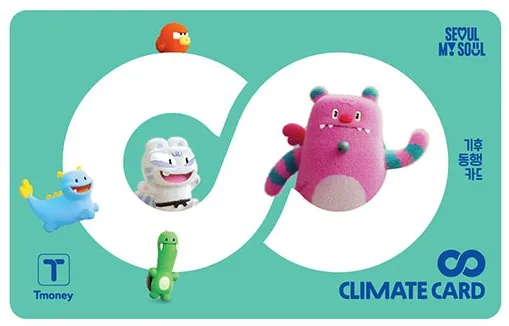
    The Climate Card is a flat-rate public transportation pass introduced by the Seoul Metropolitan Government. Once activated, it allows unlimited rides on Seoul subways and city buses for a fixed period. Some plans also include Ttareungi (Seoul’s public bike system). The goal is simple: encourage public transport use while helping users save on daily travel costs.

    2. How Much Does It Cost and How Much Can You Save?

    The standard prices are straightforward.
    A 30-day pass costs around KRW 62,000, and if you want to include Ttareungi, the price goes up slightly to about KRW 65,000. For travelers, there are also short-term passes (1, 2, 3, 5, or 7 days), generally ranging from KRW 5,000 to KRW 20,000, depending on the duration. If you plan to take the subway or bus more than two or three times a day, the card quickly becomes cheaper than pay-per-ride fares.

    Also, note that if you buy a physical card, additional KRW 3,000 is charged for the card, which is non-refundable.

    3. How to Use It (Important for Short-Term Foreign Travelers)

    This is where many foreigners get confused.
    Mobile Climate Cards are not suitable for most short-term foreign visitors, especially iPhone users or travelers without Korean phone authentication. In practice, foreign tourists should use the physical card only. Once you have the physical card, usage is simple: tap it at subway gates and bus readers just like a normal T-money card.

    4. Where to Buy the Physical Card

    You can purchase the Climate Card at:

    • Major subway station customer service centers (Lines 1–8)
    • Tourist information centers such as Myeongdong or Seoul Tourism Plaza
    • Some convenience stores (ex. GS25, CU, Seven Eleven) near subway stations

    The physical card itself usually costs around KRW 3,000, separate from the pass fee.

    5. How to Recharge the Card

    After buying the card, you must activate it at a subway station recharge machine. At the machine, you choose the pass type (1-day, 7-day, 30-day, etc.) and pay using cash or a credit/debit card, depending on the machine. Once charged, the pass becomes valid immediately or from the selected start time.

    6. Important Things Foreigners Should Know (Refunds & Limitations)

    Refunds are the most critical issue for foreigners.
    If you do not have a Korean bank account and want a refund for unused balance, you must first stop the card at a subway recharge machine. After that, you need to visit T-money headquarters near Seoul Station in person to apply for a refund. The refund is not processed immediately—you must return about three days later to receive the remaining balance. This process can be inconvenient, so it’s best to plan your usage carefully.

    Also note that refunds after the pass expires are generally difficult, and once a short-term pass is heavily used, the refundable amount may be limited.


    Koodeep Tip

    If you’re staying in Seoul for 3–7 days and plan to move around a lot, the Climate Card is a great deal—as long as you’re comfortable using a physical card and don’t expect a quick refund. For longer stays, the 30-day pass offers some of the best transport value in the city.

    Getting around Seoul doesn’t have to be complicated. With the right card and a bit of planning, it can also be surprisingly affordable.

  • Where to Watch the 2025 Geminid Meteor Shower in BUSAN (Dec 13–14) — Best Spots

    December 13 is expected to bring a meteor shower across Korea, but for once, Busan may be the better place to look up. While Seoul is forecast to see snow and heavy cloud cover—making stargazing difficult—Busan’s weather tells a more hopeful story.

    Rain is expected on the evening of December 13 in Busan, but forecasts suggest that the sky will gradually clear from the early morning of December 14, creating a narrow yet exciting window to catch shooting stars before sunrise.

    Thanks to its milder winter climate and coastal geography, Busan often enjoys clearer skies than Seoul during cold snaps. If the clouds cooperate, heading out in the early hours could reward you with fleeting streaks of light across the winter sky. Below are some of the best places in Busan to watch meteor showers, especially for visitors and foreigners living in the city.

    Best Stargazing Spots in Busan

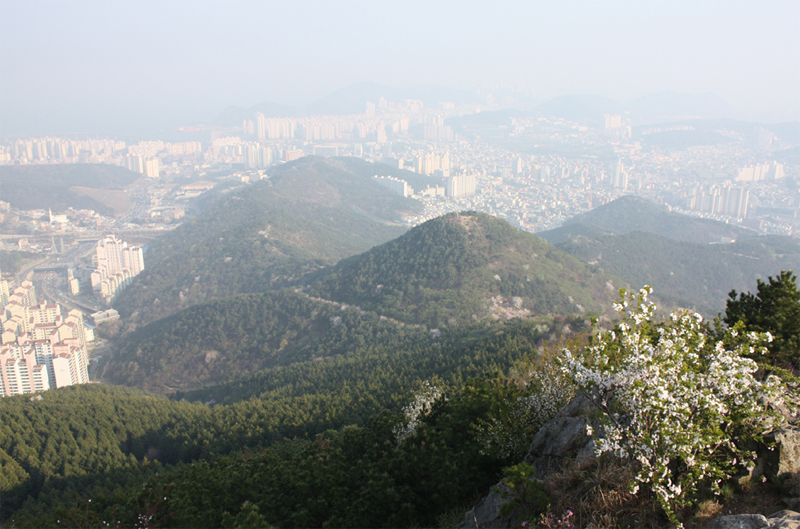
    Geumryeonsan (금련산) is one of the most accessible stargazing spots in Busan.

    Geumryeonsan (금련산) is one of the most accessible stargazing spots in Busan, located near Gwangan and Millak. Despite being close to the city center, its elevation helps reduce light pollution, and the open viewpoints near the summit offer a surprisingly wide view of the night sky. It’s a popular choice for casual night hikers and those who want a balance between convenience and atmosphere.

    Orangdae (오랑대), near Haedong Yonggungsa Temple, is a classic choice for night sky lovers. Facing the open sea, this area benefits from minimal artificial lighting and unobstructed horizons. The sound of waves and the dark ocean backdrop make it one of the most immersive places to watch meteors, especially in the quiet hours before dawn.

    Dadaepo Beach (다대포해수욕장) is another strong candidate, particularly for beginners. The wide beach, open western horizon, and relatively low surrounding buildings make it easy to scan the sky. On clear nights, it’s one of the few places in Busan where you can stargaze without hiking, simply by standing on the sand and looking up.

    Amnam Park (암남공원), located near Songdo, offers coastal cliffs and forested paths that block much of the city’s light. Certain lookout points within the park provide dark, elevated spaces ideal for early-morning meteor watching, especially if you prefer a quieter, nature-focused environment.

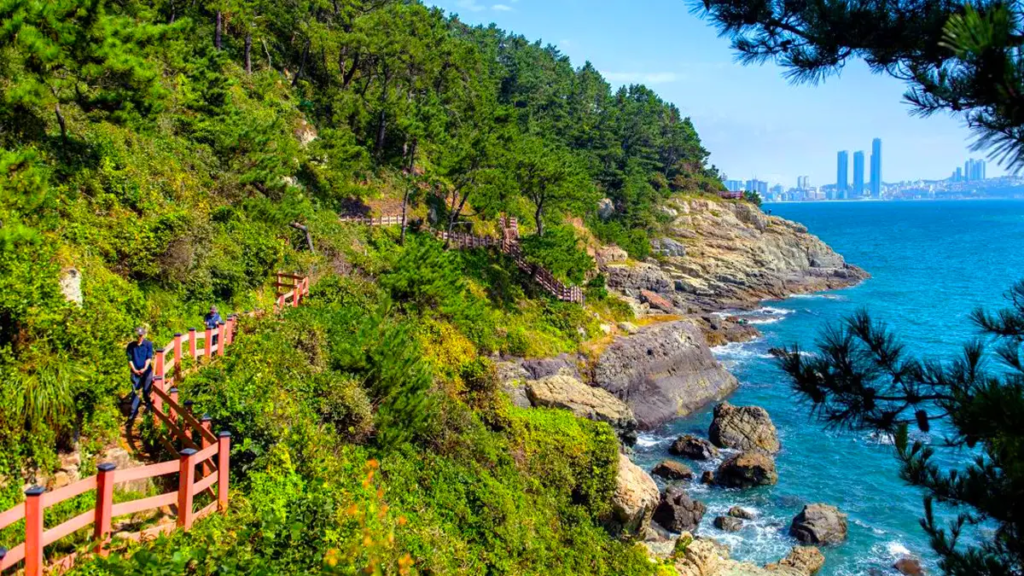
    Igidae Coastal Walk (이기대 해안산책로) is less commonly mentioned for stargazing, but can offer a great trail for stargazing.

    Igidae Coastal Walk (이기대 해안산책로) is less commonly mentioned for stargazing, but parts of the trail away from Gwangan Bridge lighting can be surprisingly dark. With the sea stretching out ahead and limited artificial light, it’s a great option for those who enjoy combining a night walk with sky watching.

    Stargazing Tips for Busan in December

    For the best experience, aim to go out between 3:00 a.m. and sunrise on December 14, when the sky is darkest and meteor activity is more noticeable. Dress warmly, bring a thermos if you can, and give your eyes at least 15–20 minutes to adjust to the darkness. Even if you only catch a few shooting stars, the experience of watching the winter sky over Busan is worth it.

    Sometimes, all it takes is clearer skies and a bit of patience. This December, Busan might just be where Korea’s shooting stars choose to shine.