If you live in Seoul or are visiting the city this week, here’s an important update:
A subway strike may begin on December 12, affecting Lines 1 through 8 of the Seoul Metropolitan Subway.
Line 9 is not participating in the strike.
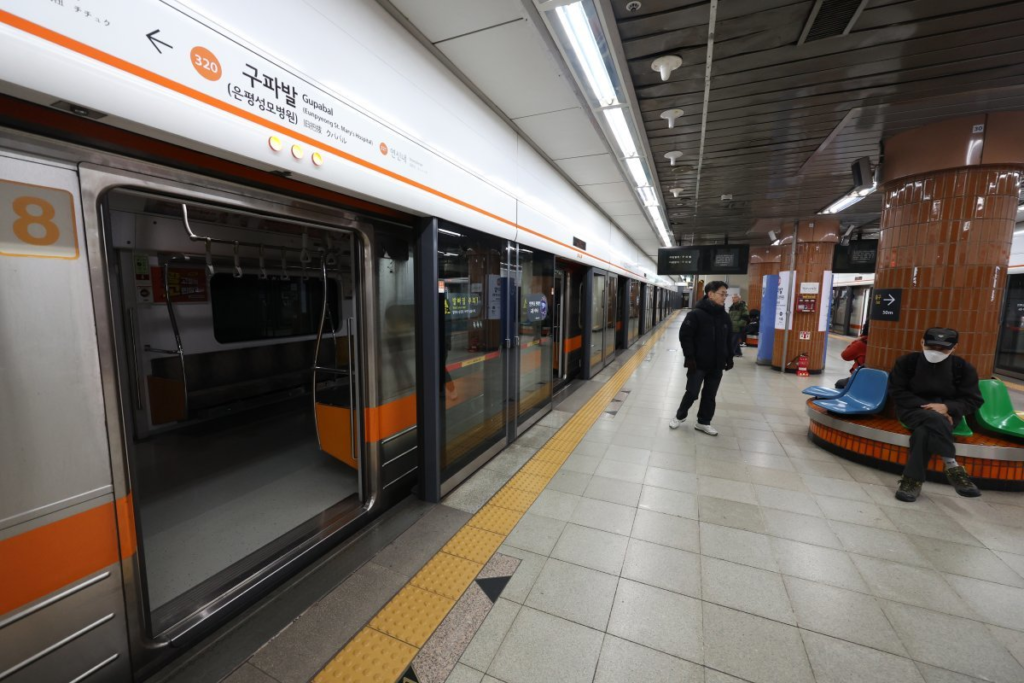
The city has announced emergency plans to keep trains running, but some delays and congestion are still expected. Below is what foreigners should know to avoid travel disruptions during this period.
1. Which Lines Are Affected?
- Potential strike lines: Seoul Subway Lines 1–8
- Not affected: Line 9 (operates normally even if the strike begins)
This means most of the central Seoul network may experience reduced operations, but trains will still run at high frequency during rush hours.
2. Will the Subway Still Operate?
Yes — the city will maintain 88–100% service levels, even after the strike begins.
Morning Rush Hour (7:00–9:00)
- Lines 1–8 operate at 100% of normal service.
- Even if Korail & Seoul Metro strike simultaneously, morning service is expected to stay above 90%.
Evening Rush Hour (18:00–20:00)
- Lines 2 and 5–8 operate at 100%.
- Emergency trains will be on standby on Lines 2, 3, and 4 to reduce congestion.
If the strike lasts more than 8 days
- Morning service: 90%+
- Evening service: 80%+
In short, trains will keep running, but stations may be more crowded than usual.
3. Additional Transportation — Buses Will Increase Service
To reduce inconvenience, Seoul will deploy all available alternative transportation, including major increases in bus frequency.
City Bus Adjustments
- 2,538 additional bus departures during peak hours
- Morning peak extended: 6:00–9:00 (starts 1 hour earlier)
- Evening peak extended: 17:00–20:00 (ends 1 hour later)
Special Routes
- Daramjwi (Squirrel) Buses: Operating time extends from 2 → 3 hours (55 extra runs)
- Donghaeng Community Buses: Also extended from 2 → 3 hours (83 extra runs)
Emergency Vehicles
- Extra standby and shortened-route buses will be in operation across 161 routes.
If the subway seems too crowded, buses will be a strong alternative — especially across central Seoul.
4. Safety & Crowd Management
Since the Seoul subway system is considered essential infrastructure, the city will deploy:
- 13,000+ staff to maintain operations
- 124 city employees stationed at 31 major crowded stations
- Increased on-site monitoring and crowd control
- Updated real-time information across apps and stations
Foreign travelers should expect more staff presence at major stations like Seoul Station, Gangnam, Hongdae, and Dongdaemun.
5. Where to Check Live Updates (English-Friendly Options)
Seoul provides real-time information through:
- TOPIS website: https://topis.seoul.go.kr
- Subway station digital screens & bus stop information terminals (BIT)
- Ttota Subway App (또타지하철)
These sources will update strike status, train frequencies, and bus reinforcement schedules.
6. What Foreigners Should Do
To travel smoothly during a potential strike:
- Allow extra time for commuting.
- Use Line 9 when possible — it is not included in the strike.
- Consider buses for cross-city trips (especially during peak hours).
- Avoid transferring at major hubs during rush hour.
- Check live information before leaving home or your hotel.
Final Tip
Seoul officials emphasized that they are using all available transportation resources to minimize inconvenience. Negotiations are still ongoing, and a strike may be avoided — but staying informed will help you move around the city with confidence.
Leave a Reply