Seoul isn’t just a city of palaces and skyscrapers—it’s also one of the few capitals in the world where you can hop on the subway and find yourself at a mountain trailhead within minutes.
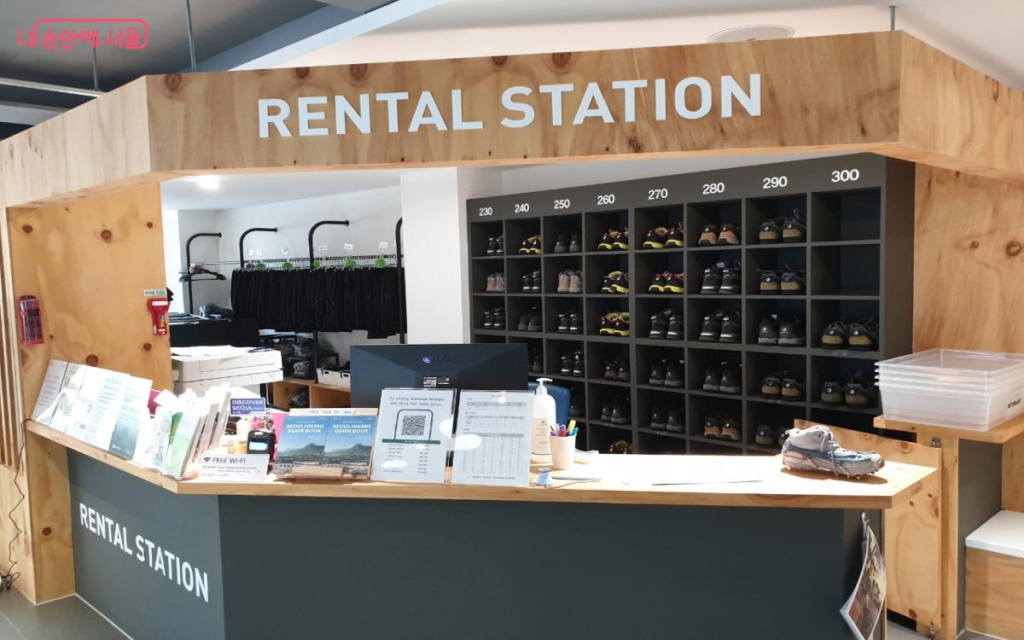
To make this even easier for travelers, the city operates three dedicated “urban hiking centers.” These facilities provide affordable gear rental, multilingual information, and clear hiking routes that help visitors enjoy Seoul’s mountains safely and comfortably.
Below is a beginner’s guide for the three major urban hiking centers in Seoul, how to reach them, and which courses to try.
1. Seoul Hiking Tourism Center (Bukhansan)
How to get there:
Take the Ui-Sinseol Line to Bukhansan Ui Station. From Exit 2, it’s about a 5-minute walk to the center.
What you can rent:
Hiking boots, trekking poles, backpacks, gloves, crampons, and small accessories. Lockers and lounge spaces are available for pre- or post-hike breaks.
Recommended courses:
- Beginner course: Ui trailhead → Doseonsa → Samcheonsa. A calm 2–3 hour route through forest paths and historic temples.
- Advanced course: Ui trailhead → Daedongmun → Baegundae Peak. The classic Bukhansan summit trail with granite ridges and panoramic city views. Expect 3–4 hours and some steep sections.
2. Seoul Hiking Tourism Center (Bugaksan)
How to get there:
Take Line 3 to Anguk Station and walk about 15 minutes to the center in Samcheong-dong. You can also take bus No. 11 (Jongno-gu district bus) from Gwanghwamun area if preferred.
What you can rent:
Standard hiking gear plus maps and multilingual hiking support. This center operates inside a renovated hanok, and some cultural programs (like calligraphy or craft workshops) may also be available.
Recommended courses:
- City Wall history walk: Bugak Pagoda → Sukjeongmun → Changuimun. Smooth pacing, rich scenery, and 2–3 hours along sections of the Seoul City Wall.
- Sunset ridge course: Bugak Skyway → Bugaksan summit. A 1–2 hour climb famous for its sweeping dusk and night views over central Seoul.
3. Seoul Hiking Tourism Center (Gwanaksan)
How to get there:
Take the Sillim Line to Gwanaksan Station. The center is located directly inside the station at the basement level.
What you can rent:
Boots, poles, backpacks, crampons, and small accessories. The center also offers luggage storage and multilingual hiking guides tailored for visitors unfamiliar with Korean terrain.
Recommended courses:
- Easy forest trail: Gwanaksan Park → Samgeori Yaksooter. About 1.5 hours of gentle walking through wooded areas.
- Moderate summit hike: Gonghak-gwan route → Yeonju-dae Peak. A 3–3.5 hour course with rewarding ridge views and varied forest scenery.
Rental Fees and Traveler Tips
Rental prices remain budget-friendly: boots around 2,000 KRW, trekking poles or crampons around 1,000–2,000 KRW, and full outfits around 3,000 KRW – in total, less than 10,000 KRW per person.
This makes the centers ideal for travelers who didn’t pack hiking gear but want to experience Seoul’s outdoor culture. All centers provide lockers, rest areas, and helpful staff who can explain routes in English, Chinese, or Japanese.
Why These Centers Are Perfect for Travelers
These facilities bridge the gap between urban travel and nature exploration. You can leave your hotel, take a single subway line, rent full gear within minutes, and begin a mountain hike immediately—often with sweeping views of the city below. The mix of accessibility, safety, cultural insights, and well-maintained routes makes Seoul’s urban hiking system one of the city’s most underrated attractions.
Leave a Reply