Koodeep

  • Three Christmas Markets to Explore in Seoul This Winter

    Unlike many European cities, Christmas markets are not a deeply rooted tradition in Korea. One reason is simple: Korean winters are brutally cold, especially in December, making long outdoor activities less appealing. As a result, Christmas markets have never fully developed into a nationwide seasonal culture.

    Still, if you are visiting Korea this winter and want to experience a festive atmosphere outdoors, there are three Christmas markets in Seoul worth noting.

    1. Gwanghwamun Christmas Market – The Biggest in Seoul

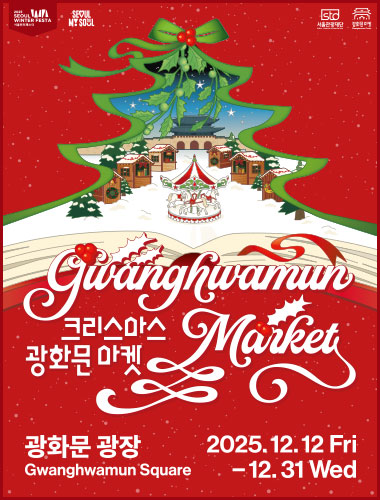
    This is the largest and most official Christmas market in Seoul, hosted directly by the city government and held in Gwanghwamun Square from December 12 to 31, 2025. The event runs for 20 days and is divided into three themed periods, each bringing in 45 small-business vendors plus a Santa Village exhibition. Visitors will find Christmas ornaments, seasonal snacks, collaboration booths, and even a carousel set up in the middle of the plaza.

    The atmosphere becomes especially festive after sunset, when holiday lights, music, and photo zones transform the historic square into a winter fairground. Different vendors appear each week, so even repeat visitors will experience something new. If you want to feel the holiday spirit outdoors at least once during your Seoul trip, this is the one to see.
    2. Lotte Town Christmas Market in Jamsil – A Winter Festival with Heart

    Located on the lawn of World Park Plaza next to Lotte World Tower, the Lotte Town Christmas Market runs from November 20, 2025, to January 4, 2026—one of the longest-running holiday events in the city. This Christmas market blends outdoor charm with the convenience of a giant multi-purpose complex, making it easy to enjoy even on freezing winter days.

    Everyday highlights include the “Heart Light Show,” where a moving heart-shaped display and a giant Christmas tree light up the plaza three times a day, and a magical “Snow Shower” effect that sends white flakes falling around the tree five times daily. There’s also a two-story carousel that adds a nostalgic glow to the space. Pop-up food stalls, gift shops, and seasonal desserts line the walking area, offering plenty of warm snacks and holiday treats to enjoy between photos. If you’re looking for a market that feels like a mini winter theme park—without leaving the city—this one’s a perfect pick.

    3. French Christmas Market in Seorae Village – A Warm Community Feel

    Seorae Village is known as Seoul’s “Little France,” home to many French residents and the French international school. For years, the community has hosted a charming Christmas market that feels more like a neighborhood holiday fair than a commercial event.

    If you want to experience a European-style market with mulled wine, handmade crafts, and a small-village vibe, this is the place. Think of it as a weekend stroll in a French town square—right in southern Seoul.

    This year’s exact schedule hasn’t been confirmed yet, but based on past years, it will likely take place in early to mid-December. If you’re interested, keep an eye on updates and plan a visit when the dates are announced.
  • Celebrate with a Bang: Hanwha Eagles’ 40th Anniversary Fireworks Festival in Daejeon

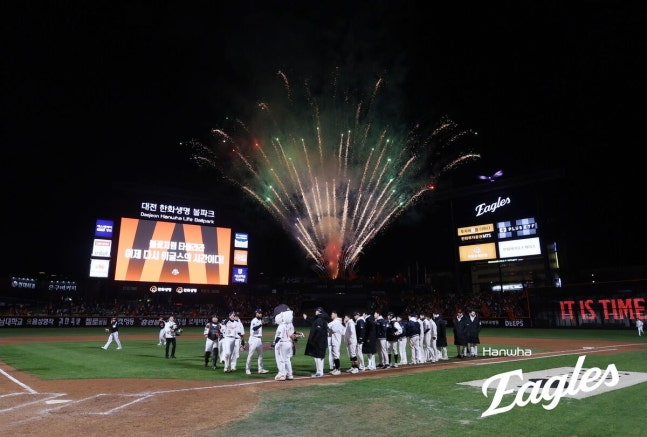
    On November 30, 2025, the city of Daejeon will light up with a spectacular fireworks festival hosted by the Hanwha Eagles, one of Korea’s beloved professional baseball teams. In celebration of the team’s 40th anniversary, the festival promises an unforgettable night along the Gapcheon River near Expo Park, starting at 7:00 PM.

    A night when baseball magic meets fireworks – the Hanwha Eagles celebrate 40 years with a sky full of color in Daejeon.

    Visitors can look forward to a dazzling 30-minute multimedia drone show followed by a grand fireworks display. This fusion of modern drone technology with traditional pyrotechnics makes for a unique experience that goes beyond a typical fireworks show.

    Starting at 4:00 PM on the same day, there will also be a special fan signing event for 2025 season membership holders. Details about the venue and participation method will be announced soon via the team’s official social media channels, so keep an eye out if you’re planning to attend.

    The event is not just for baseball fans. According to Hanwha Eagles, the purpose behind this celebration is to give back: “Our goal has always been to bring joy and happiness to the lives of our fans and the citizens of Daejeon. This festival is our way of saying thank you for 40 years of love and support.”

    Whether you’re a baseball lover, a festival enthusiast, or just in search of a memorable night out in Korea, this event is one not to miss. Bring your friends, find a cozy spot along the riverside, and immerse yourself in a colorful evening of celebration and community spirit.

    Event Snapshot

    • Date & Time: November 30, 2025, 7:00 PM
    • Location: Gapcheon River (near Expo Park), Daejeon
    • Highlights: Multimedia drone show, fireworks display, fan signing event (from 4:00 PM)

    Mark your calendar and get ready to experience Daejeon like never before!

  • Three Things to Know About Korea’s College Entrance Exam Day

    On November 13, 2025, Korea will hold one of its most important national events — the College Scholastic Ability Test, better known as “Suneung (수능)” in Korea.
    It’s not just an exam day; it’s a nationwide event that brings the entire country to a gentle pause. From working hours to flight schedules, everything is adjusted to help students who have spent years preparing for this one day. Here are three fascinating facts about how Korea changes on Suneung day.


    1. Later work hours to clear the roads

    On Suneung morning, many government offices and companies delay their opening hours to 10 a.m..
    This nationwide adjustment helps reduce traffic congestion so that test-takers can reach their exam centers smoothly. Because of this, public transportation in the morning is unusually calm, with subways and buses running more freely than usual. The whole morning feels quieter — almost as if the entire city is wishing students good luck.


    2. Police escort services for late students

    If a student oversleeps or gets stuck in traffic, it’s not the end of the world — the police are ready to help.
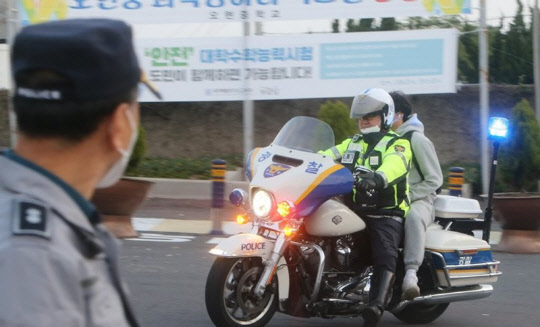
    Every year, police officers offer emergency escort services, using patrol cars or motorcycles to quickly get late students to their test centers. It’s one of those uniquely Korean moments when everyone — even law enforcement — works together to make sure no one misses the biggest exam of their life.

    It’s a familiar sight on Suneung day — a police officer giving a last-minute ride to a student running late for the college entrance exam.

    3. Even airplanes stop flying during the English listening test (Nov. 13, 2025)

    During the English listening section, which takes place from 1:05 p.m. to 1:40 p.m. this year, absolute silence is required across the country.
    To make this possible, the Ministry of Land, Infrastructure and Transport will suspend all domestic takeoffs and landings nationwide for 35 minutes. On November 13, 2025, around 140 flights will be rescheduled to prevent any noise interference. It’s a remarkable example of how seriously the nation treats the exam — even the skies go quiet for the students’ dream.


    A small gesture that goes a long way

    If you have a Korean friend taking the exam — or know someone whose sibling or child is — take a moment to send them a word of encouragement.
    A simple “Good luck!” or a small chocolate gift can bring a smile to someone who’s been studying for years for this moment.

    On Suneung day, the entire country moves a little slower, speaks a little softer, and cheers — quietly but wholeheartedly — for its students.

  • Korean University Calendar: Month by Month

    If you’re planning to study in Korea as an exchange student, it’s helpful to know how the academic year works. Unlike many Western countries that start in September, Korean universities begin their first semester in March and the second semester in September. Here’s what a typical year looks like on campus.


    March (3월)

    The spring semester begins, and campus life bursts into energy.
    New students arrive, orientation events take place, and student clubs (동아리) actively recruit new members. It’s one of the most exciting times of the year to experience Korean university culture.


    April (4월)

    This is midterm exam season for most universities.
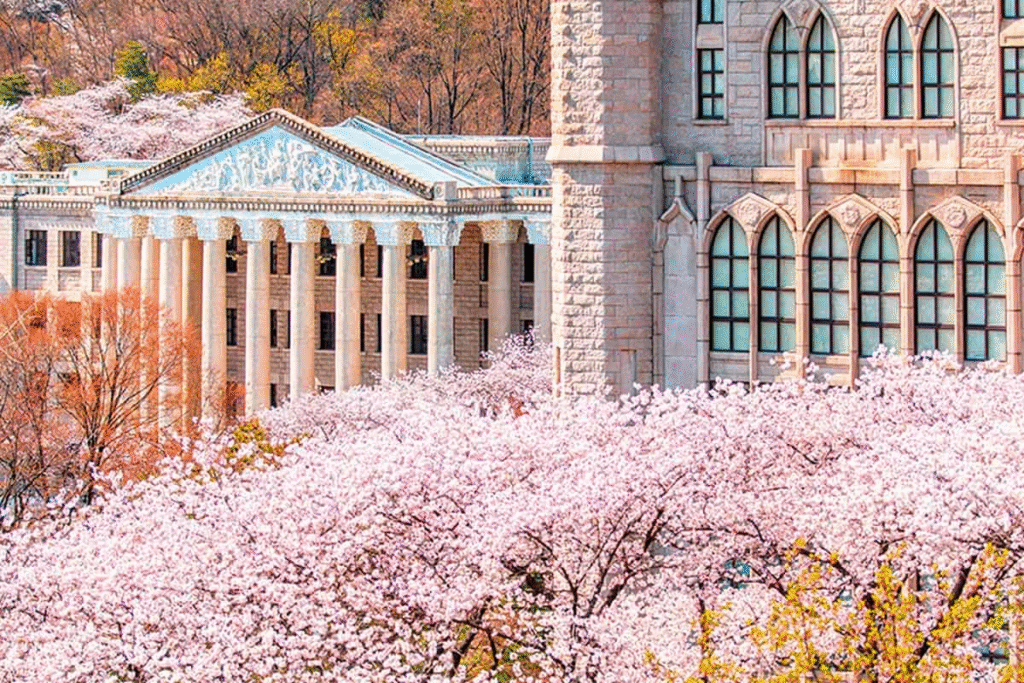
    Interestingly, it often overlaps with cherry blossom season, which makes students a little sad — they can see the pink flowers only briefly between study sessions!

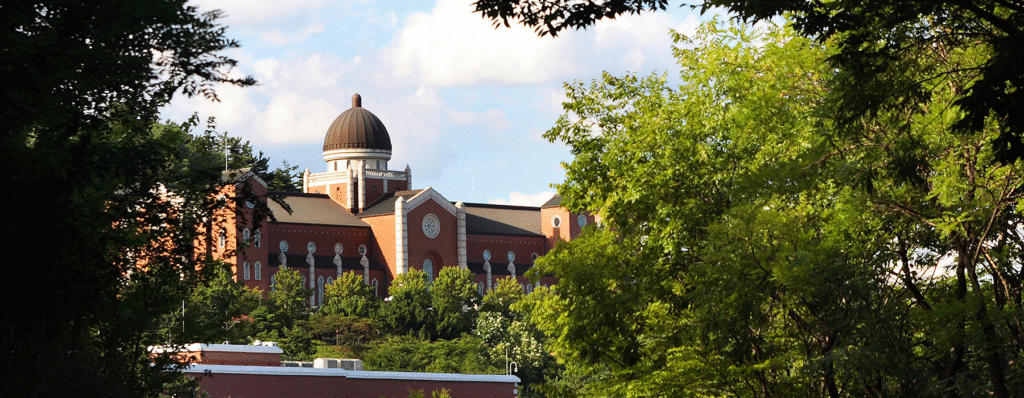
    Kyunghee University in Seoul is famous for its beautiful cherry blossoms in April.

    May (5월)

    A month of university festivals.
    Many campuses host outdoor concerts, food booths, and celebrity performances. It’s a great time to meet friends, relax, and enjoy the liveliest side of Korean campus life.


    June (6월)

    Final exams mark the end of the semester.
    After the exams, students begin their long-awaited summer vacation.


    July–August (7월–8월)

    Summer break.
    Most students travel or work part-time, but universities also offer summer sessions (계절학기) in July for those who want to earn extra credits or retake classes.


    September (9월)

    The fall semester begins.
    Although not as hectic as March, student clubs and academic societies still recruit new members, and the campus regains its busy atmosphere after the summer.


    October (10월)

    It’s midterm season again, and autumn colors fill the campus.
    After exams, many universities organize sports festivals or athletic meets, reflecting Korea’s traditional custom of holding community sports events in the fall.
    It’s a lively time filled with team games, cheering, and outdoor activities that strengthen campus spirit.


    November–December (11월–12월)

    Final exam period usually runs from late November to early December, marking the close of the second semester. After exams, campuses become quiet as students prepare for winter vacation.


    January–February (1월–2월)

    Winter break.
    January often includes winter session courses, while February is graduation season — a time of ceremonies, farewells, and new beginnings.


    Tip: Korean universities usually publish their academic calendars 6–12 months in advance, so be sure to check your host university’s website before planning travel or exchange activities.

  • Understanding the Probation Period in Korea

    Starting a new job in Korea? Many companies include a “probation period” (수습기간) in employment contracts. This period is meant to evaluate whether the employee is a good fit — and whether the company provides a suitable environment. But there are a lot of misconceptions about how long this period lasts and what rights employees have during it. Let’s break down the key questions foreigners often ask.


    Q1. The probation period in Korea is legally limited to three months. True or false?

    → False.
    There is no law in Korea that specifically limits the probation period to three months.
    Many companies choose three months simply because, under the Labor Standards Act, employers are exempt from the obligation to give a 30-day dismissal notice if they terminate an employee within the first three months of employment (Article 26).
    In other words, this “three-month rule” comes from the dismissal notice exemption — not from a legal cap on probation itself.
    Companies may set a shorter or longer period depending on their internal policies, as long as the terms are clearly stated in the employment contract or the company’s Rules of Employment (ROE).


    Q2. Can the company unilaterally extend the probation period?

    → No, it cannot.
    Under Article 4 of the Labor Standards Act, “working conditions shall be determined through the equal agreement between employer and employee.”
    Therefore, if the company wishes to extend the probation period, there must be a clear legal basis — either a clause in the ROE that allows such extension, or the employee’s explicit consent.
    A company cannot simply declare, “Your probation is extended for another month” without following due process.


    Q3. Can the company pay less than the minimum wage during probation?

    → Partially yes, but only under strict conditions.
    If the employee is hired under a contract lasting one year or more, the company may legally pay up to 90% of the statutory minimum wage during the first three months of probation.
    Since the minimum hourly wage in 2025 is ₩10,030, the company can pay as low as ₩9,027 per hour during that initial period.
    However, this exception applies only to those on long-term contracts (one year or more). For shorter-term or fixed-term contracts, the full minimum wage must still be paid from the first day of employment.


    Q4. Can the company fire a probationary employee “at will”?

    → No.
    Korean labor law does not recognize “at-will” termination.
    Even during the probation period, a company may dismiss an employee only if there is a “just cause” (정당한 이유) as required under Article 23(1) of the Labor Standards Act.
    Courts tend to interpret “just cause” a bit more broadly during probation — for example, if the employee clearly lacks basic job competence or fails to meet minimum performance expectations despite fair evaluation.
    Still, this does not mean the company can terminate a probationary employee without any reason. A dismissal without a legitimate and specific cause would still be considered unlawful.


    In Korea, the probation period is not a loophole that allows employers to freely test or dismiss workers. Probationary employees enjoy most of the same rights and protections as regular employees — including minimum wage, social insurance, and the right not to be dismissed without cause.
    If you’re starting a job in Korea, always be sure to check:

    • The exact length of your probation,
    • Whether your pay is temporarily reduced (and by how much), and
    • What evaluation standards apply before confirmation.
  • Where to Catch Express and Intercity Buses in Seoul: A Guide for Travelers

    For many travelers, trains like KTX and SRT are the go-to options for exploring other parts of Korea. But intercity and express buses are another excellent — and often more flexible — way to reach cities that fast trains don’t directly serve. Seoul has several major bus terminals, each connecting to different regions of the country. Knowing which one to use can save you both time and confusion. Here’s a guide to the three main terminals in Seoul that every traveler should know.


    1. Seoul Express Bus Terminal (고속버스터미널) – The Largest and Most Iconic

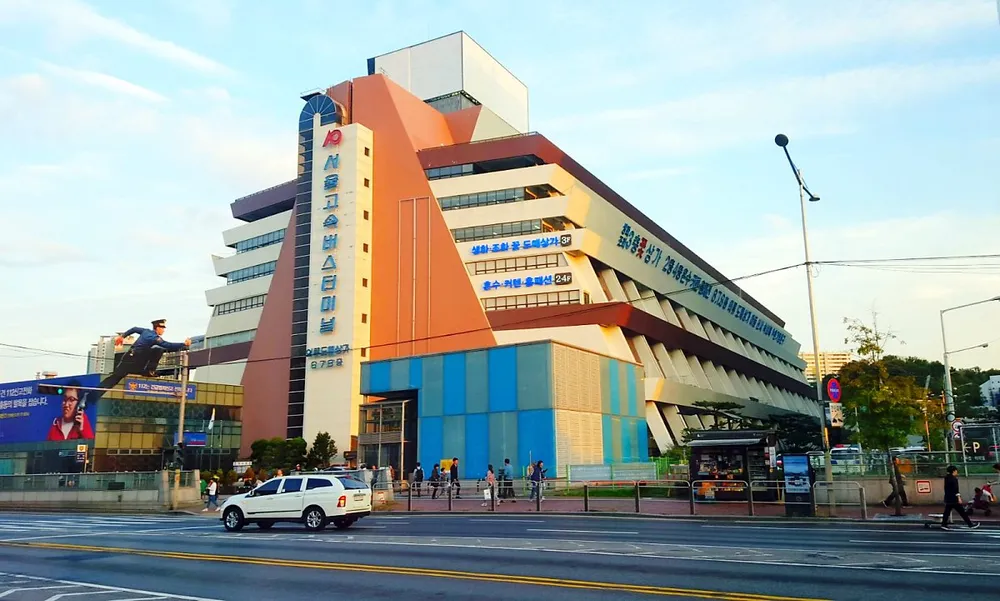
    Located in Gangnam’s Banpo area, the Seoul Express Bus Terminal is not only the city’s biggest transportation hub but also a notable architectural landmark. The massive concrete structure, originally designed in a brutalist style reminiscent of a monumental pyramid, once represented Korea’s modernist ambitions in the 1970s and even drew international attention at the time. Over the years, however, parts of the raw concrete exterior have been painted over, softening the stark aesthetic — a change that some architecture enthusiasts still debate today as Korea’s interest in brutalism resurges.

    Functionally, the terminal is divided into two main zones: Central City Terminal (센트럴시티) and Gyeongbu Line Terminal (경부선 터미널), each serving different destinations across the country. It connects to Subway Lines 3, 7, and 9, providing easy access from most parts of Seoul. Inside, you’ll find Shinsegae Department Store, the popular Goto Mall underground shopping arcade, and countless cafés and restaurants — making it one of the most vibrant yet practical gateways for travelers.


    2. Dong Seoul Bus Terminal (동서울터미널) – For the East and the Mountains

    Located in Gwangjin-gu near Gangbyeon Station (Line 2), Dong Seoul Bus Terminal mainly serves eastern and northern destinations, including Gangneung, Sokcho, Chuncheon, Wonju, and Taebaek. It’s the go-to hub for those planning trips to Gangwon Province, famous for its mountains, ski resorts, and coastal scenery.

    One unique aspect of Dong Seoul Terminal is its atmosphere — since Gangwon-do hosts many military bases, it’s quite common to see soldiers traveling to and from their posts, which gives the terminal a distinct local character.

    The terminal sits next to Technomart, an electronics and shopping complex, with plenty of restaurants and cafés nearby. For travelers staying in Jamsil, Songpa, Konkuk University or eastern Seoul, this terminal offers the fastest and most convenient way to reach the country’s eastern regions.


    3. Nambu Bus Terminal (남부터미널) – Compact and Efficient

    Located right by Nambu Terminal Station on Subway Line 3, this terminal is smaller and simpler than the other major ones but offers excellent efficiency. It mainly serves smaller cities and towns in the southern regions, including Cheonan, Gongju, Jinju, and Buyeo.

    Because of its size, Nambu Bus Terminal is easy to navigate, with shorter lines and a more relaxed atmosphere. Facilities include convenience stores, bakeries, and small restaurants — enough to make your wait comfortable without the overwhelming crowds of larger terminals. For those staying around Gangnam or southern Seoul, it’s often the most practical option for short or regional trips.


    Takeaway

    Seoul’s express and intercity bus terminals each serve different regions of Korea — from the southern coast to the eastern mountains. Whether you’re catching a long-distance bus to Busan or heading to a quiet town in Gangwon-do, choosing the right terminal can save valuable time and make your journey smoother.

  • Where to Catch KTX and SRT Trains in Seoul: A Traveler’s Guide

    Many travelers visiting Seoul assume that all KTX (Korea Train Express) trains depart from Seoul Station. In reality, there are several major train stations in and around the city where high-speed trains — including both KTX and SRT — depart for destinations across the country. Depending on where you stay in Seoul, a different station might be more convenient or faster to reach. Here’s a breakdown of the key high-speed train stations you should know.


    1. Suseo Station (수서역) – Gateway to the South via SRT

    Suseo Station, located in southeastern Seoul, is the starting point of the SRT (Super Rapid Train) — a high-speed service similar to KTX, connecting Seoul with cities like Busan, Daegu, and Gwangju. Operated by a different company than KTX, SRT trains often offer faster travel times for southern routes since they take a more direct path from Gangnam.

    For travelers staying in Gangnam, Jamsil, or southeastern Seoul, Suseo Station can be far more convenient than Seoul Station. You can reach it easily by Subway Line 3 (Orange) or the Suin–Bundang Line (Yellow). However, SRT tickets tend to sell out quickly, especially during weekends or holidays, so it’s wise to book in advance through the official SRT website or app.


    2. Yongsan Station (용산역) – Trains to the Honam Region

    Located near the Han River, Yongsan Station is another major hub for KTX, particularly serving the Honam Line, which connects Seoul to destinations in the southwest such as Gwangju, Mokpo, and Jeonju.

    Beyond being a transportation hub, Yongsan Station is part of a massive complex that includes I’Park Mall, Shilla I’Park Duty Free Mall(신라아이파크면세점), a CGV IMAX theater, electronic stores, and numerous restaurants — making it one of the most dynamic places to spend time before your train. It’s ideal for travelers who want to combine travel with shopping or entertainment, especially those heading toward Korea’s southern regions.


    3. Cheongnyangni Station (청량리역) – For Gangneung, Andong, and Beyond

    Situated in eastern Seoul, Cheongnyangni Station serves as the starting point for KTX lines heading east, including the Gangneung Line (popular among travelers visiting Gangneung’s beaches) and the Jungang Line, which connects to scenic inland cities like Jecheon and Andong — both known for their nature, traditional culture, and hiking spots.

    The station is directly connected to Lotte Department Store, making it a great stop for shopping or grabbing a meal before departure. If you’re staying around Dongdaemun, Nowon, Hoegi or the eastern part of Seoul, Cheongnyangni Station is often much easier to reach than Seoul Station.


    4. Gwangmyeong Station (광명역) – Convenient for Southern Gyeonggi and Incheon

    Although technically outside Seoul, Gwangmyeong Station is an important stop for many KTX trains that originate from Seoul Station. Located in the southern metropolitan area, it’s closer to Anyang, Gwacheon, and parts of Incheon.

    One of the best features for international travelers is that direct airport limousine buses connect Incheon International Airport to Gwangmyeong Station. This makes it extremely convenient for those heading directly from the airport to another city — or returning from the Southern region straight to the airport — without needing to go through downtown Seoul.


    Takeaway

    When traveling by high-speed rail in Korea, it’s worth checking not just your destination but which station your train departs from. Whether you’re exploring the beaches of Gangneung, the cultural heart of Andong, or the southern cities like Busan and Gwangju, choosing the right station in Seoul can save time and make your journey smoother — and sometimes, much more enjoyable.

  • Exploring Seoul by River: The Return of the Han River Bus

    If you’ve ever walked along the Han River and wondered what it would be like to travel across it — not just beside it — Seoul now gives you that chance. The Han River Bus (한강버스) has officially resumed operation, offering a fresh, scenic way to explore the city. More than just public transportation, it’s a moving viewpoint of Seoul’s skyline, parks, and bridges — perfect for international students or travelers looking for a new way to experience the city.


    1. What Is the Han River Bus?

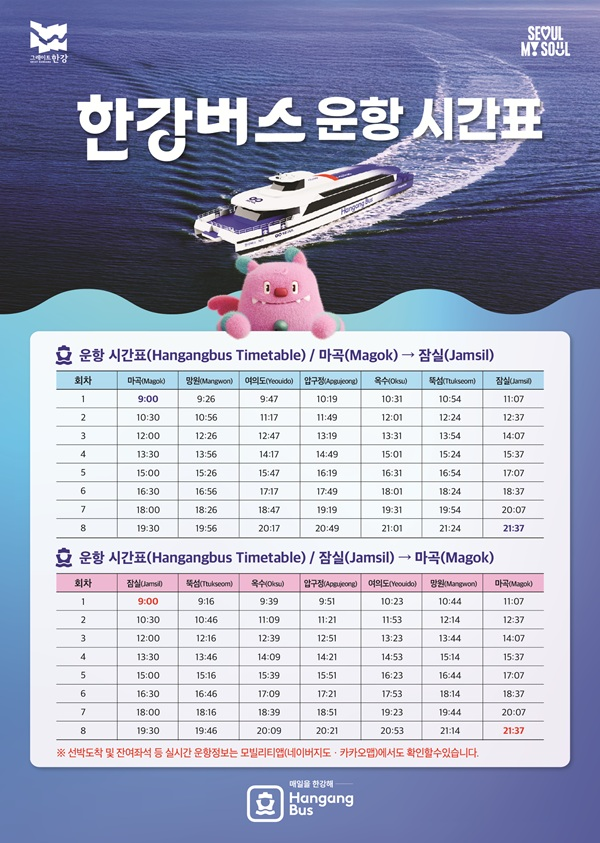
    After years of planning and a trial phase, the Han River Bus officially returned to service in November 2025. Operated by the Seoul Metropolitan Government, the route runs roughly 28.9 kilometers, connecting major riverfront districts from Magok in the west to Jamsil in the east.

    Currently, there are about 14 trips per day, with intervals of roughly one hour. As ridership grows, Seoul plans to expand the service to include express lines during commuter hours and additional weekend sailings.

    Think of it as a hybrid between a ferry and a bus — affordable, comfortable, and full of beautiful city views.


    2. Why You Should Try It

    For foreign residents or travelers, the Han River Bus isn’t just a ride — it’s a chance to see the rhythm of local life along the water. You’ll glide past riverside parks, cycling paths, and Seoul’s most famous bridges, all while avoiding traffic and subway crowds.

    Seoul’s roads can get heavily congested during rush hours, and subways are often packed to capacity. The Han River Bus offers a calm, scenic alternative to the usual city commute — a way to travel across Seoul without the stress of traffic jams or crowded trains.

    The route connects several must-see districts, so it can double as a mini city tour. It’s also a fun, eco-friendly alternative for your weekend outings with friends or visiting family.


    3. Routes and Dock Stops

    The main route runs between seven key docks:
    Magok → Mangwon → Yeouido → Apgujeong → Oksu → Ttukseom → Jamsil

    Each dock connects easily to nearby subway stations and city buses, and some — like Magok, Apgujeong, and Jamsil — even offer free shuttle buses from the nearest stations.

    An express route is scheduled to open soon, stopping only at major docks like Magok–Yeouido–Jamsil for faster commuting.


    4. Ticket Prices and Payment

    • Adult fare: ₩3,000
    • Youth (13–18 years): ₩1,800
    • Children (6–12 years): ₩1,100

    Payment is made via transportation cards such as T-money or compatible apps — cash is not accepted.

    If you’re already using the Climate Companion Card (기후동행카드), you can add just ₩5,000 for unlimited Han River Bus rides within its validity period. It’s an affordable and sustainable option for frequent travelers.


    5. Travel Tips

    • Best time to ride: Late afternoon for sunset views, or after dark for the illuminated bridges and night view of the city.
    • Bring your T-money card: No card, no boarding.
    • Check schedules online: Timetables may change with weather or events.
    • Accessibility: Onboard spaces are designed for strollers, wheelchairs, and even bicycles.

    6. A New Way to See Seoul

    The Han River Bus isn’t just transportation — it’s part of Seoul’s new identity, reconnecting the city with its most iconic landmark. It’s also a comfortable and affordable way to explore, relax, and see Seoul from a new angle.

    And for daily commuters, it can be a refreshing alternative to the city’s congested roads and crowded subways, especially during rush hours. You can skip the gridlock, enjoy the breeze, and still get where you need to go — all while taking in one of the best views Seoul has to offer.

    Whether you’re commuting to class or work, heading to Yeouido for a picnic, or simply chasing sunset views over the river, the Han River Bus gives you a journey worth taking — one wave at a time.

  • Everyday Etiquette in Korea: 3 Habits You Should Know Before Moving In

    Living in Korea can be an amazing experience — delicious food, efficient transportation, and a fascinating blend of modern and traditional life. But if you’re new here, you might notice that some everyday habits are quite different from what you’re used to. Understanding and respecting these customs will help you adjust more smoothly and avoid awkward moments. Here are three daily habits to keep in mind.


    1. Take Off Your Shoes Indoors

    In Korea, it’s customary to remove your shoes before entering someone’s home — and this tradition goes back centuries. Koreans value cleanliness and believe that the indoors should be a space free from outside dirt. Most homes have a small entry area called a 현관 (hyeon-gwan) where you take off your shoes before stepping onto the main floor.

    If you’re invited to someone’s house, never walk inside with your shoes on. It’s considered disrespectful. Even when you rent an apartment, landlords generally expect you to follow this rule. Many Koreans keep separate indoor slippers (실내화) for comfort and hygiene. So, remember: shoes off at the door!


    2. Rinse, Don’t Soak, When Doing the Dishes

    Here’s something that surprises many foreigners — in Korea, people usually don’t fill the sink with water and soap to soak dishes. Instead, they wash each dish with detergent first and then rinse everything thoroughly under running water.

    Why? Many Koreans think soaking dishes in soapy water is unhygienic because the dirty water can spread bacteria or leave residue. It’s also part of a broader cultural emphasis on visible cleanliness and freshness. If you’re living with Korean roommates or using a shared kitchen, it’s good manners to follow this practice — it’ll definitely be appreciated!


    3. Master the Art of Recycling

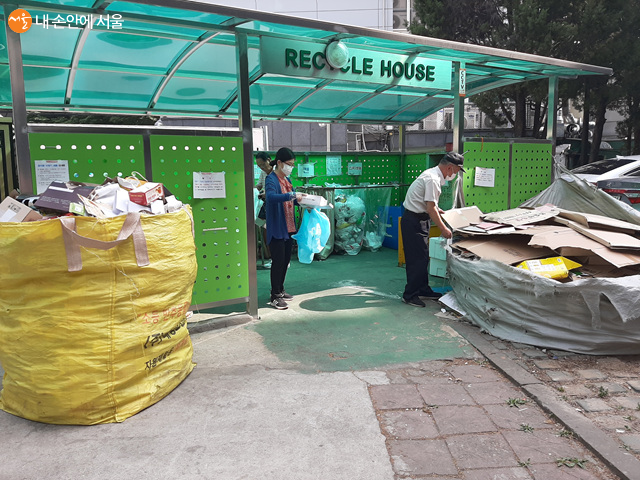
    Korea takes recycling very seriously. Every neighborhood and apartment complex follows strict recycling rules, often with designated bins for plastic, paper, glass, cans, and general waste. You’ll also see special bins for food waste (음식물 쓰레기), which must be separated from regular trash.

    In many apartment buildings, you can only take out recyclables on specific days of the week — and local authorities can even issue fines for improper disposal. It might take a little time to learn what goes where, but you can always use Google or Naver and it’s definitely worth it for the environment. Clear labeling and color-coded bins will help, and neighbors or building managers are usually happy to explain the rules.


    Living Mindfully in Korea

    Getting used to these habits may take a few weeks, but they’re easy to adopt and show respect for local customs. From leaving your shoes at the door to sorting your recyclables correctly, these small actions will help you blend into Korean daily life — and make your stay smoother, cleaner, and more enjoyable.

    Welcome to your new home in Korea, where good manners truly start at the doorstep.

  • Where to Study in Korea as an Exchange Student: Exploring the Best Cities

    Thinking about studying abroad in Korea? Great choice. But before picking your university, it’s worth considering where you want to experience life in Korea. Each city offers a different lifestyle — from the fast-paced energy of Seoul to the relaxed coastal vibes of Busan. Here’s a quick guide to help you choose the right environment for your study abroad journey.


    1. For Culture, Diversity, and Endless Things to Do: Seoul

    If you want to be where everything happens, Seoul is the place. The capital city is the cultural, educational, and entertainment hub of Korea, offering countless opportunities to explore — from K-pop concerts and art exhibitions to night markets and street food festivals. Living here means you’re always just a subway ride away from your next adventure.

    Universities popular among international students:

    • Yonsei University (연세대학교) – One of Korea’s top private universities with a strong international program and a vibrant campus life in Sinchon.
    • Korea University (고려대학교) – A prestigious institution with a beautiful, ivy-covered campus and many global exchange partnerships.
    • Kyung Hee University (경희대학교) – Known for its stunning architecture and strong programs in international studies and hospitality.

    2. For a Calmer Lifestyle and Easy Access to the Whole Country: Daejeon

    If you prefer a quieter, more balanced environment, Daejeon is an excellent choice. Located in the middle of Korea, it’s easy to travel anywhere — Seoul, Busan, and even Jeonju are just a short train ride away. The city has a reputation as Korea’s “science capital,” but it also offers cozy cafés, scenic parks, and a friendly local community.

    Universities worth considering:

    • KAIST (한국과학기술원) – World-renowned for science and engineering, offering programs in English and a strong international student network.
    • Chungnam National University (충남대학교) – A large national university with diverse academic offerings and an affordable campus lifestyle.
    • Hannam University (한남대학교) – A Christian-based institution with active exchange programs and a warm, community-oriented campus.

    3. For Affordable Living and Authentic Local Culture: Daegu

    Daegu combines a lower cost of living with an authentic Korean city feel. You’ll find great local food, friendly people, and plenty of cultural festivals — without the crowds of Seoul. The city’s transportation system is well-developed, and housing tends to be much more affordable compared to the capital.

    Recommended universities:

    • Kyungpook National University (경북대학교) – One of Korea’s leading national universities, offering a variety of English-taught courses.
    • Keimyung University (계명대학교) – Known for its picturesque campus and strong global exchange programs.
    • Daegu Catholic University (대구가톨릭대학교) – Offers close-knit campus life and active cultural exchange opportunities.
    Keimyung Univesrity in Daegu is known for its picturesque campus and strong global exchange programs.

    4. For Ocean Views and Milder Winters: Busan

    If you dream of studying near the sea, Busan is ideal. Korea’s second-largest city offers beaches, mountains, and a relaxed lifestyle — perfect for students who want both academic focus and weekend getaways. Winters are warmer than in northern cities, and the atmosphere is laid-back yet lively.

    Popular universities in Busan:

    • Pusan National University (부산대학교) – One of Korea’s top public universities with a strong reputation for engineering and social sciences.
    • Dong-A University (동아대학교) – Offers a wide range of international programs and a campus overlooking the ocean.
    • Kyungsung University (경성대학교) – Known for its youthful, artistic vibe and location near Gwangalli Beach.

    Choosing What Fits You Best

    Whether you’re drawn to Seoul’s non-stop energy, Daejeon’s balance, Daegu’s affordability, or Busan’s seaside charm, Korea offers a study experience that fits every personality. Wherever you go, you’ll find welcoming communities, delicious food, and opportunities to explore one of Asia’s most dynamic cultures.

    So, which city will be your classroom?