Category: Living deep in Korea

  • 2025 Korea Souvenir Fair: The Best Place to Discover Unique K-Goods

    If you love collecting souvenirs or want to bring home something truly unique from Korea, here’s an event you won’t want to miss.
    From November 21 to 23, 2025, the Korea Souvenir Fair will take place at DDP (Dongdaemun Design Plaza) — one of Seoul’s most iconic cultural venues. It’s a three-day celebration of creativity, design, and everything that makes “K-souvenirs” so much fun.

    This year’s theme is “A Land Filled with Exciting K-Goods”, and the event space is designed just like a playful theme park.


    What You’ll Find Inside

    Rather than simply selling products, the fair is designed as a full experience. As you walk through the halls, you’ll be able to browse:

    • Modern and traditional crafts
    • K-pop-inspired goods and character items
    • Locally designed stationery and home décor
    • Beauty & fashion accessories inspired by Korean aesthetics
    • Special regional souvenirs from cities across Korea

    With over 130 brands and creators participating, it’s one of the best places to discover souvenirs you won’t easily find in regular shops — perfect for gifts, collections, or a personal treat.


    For Curious Travelers and Long-Term Residents

    If you’re visiting Korea for a short trip, the fair is a convenient one-stop place to pick up meaningful keepsakes.
    If you’re living here long-term, it’s a rare chance to explore new and emerging Korean brands, meet creators, and support small businesses designing the next wave of K-goods.

    The fair also includes interactive zones, photo spots, and showcases of award-winning souvenir designs. Even if you don’t plan to buy much, it’s a fun cultural experience — a mix of theme park energy and curated art market.


    Why You Should Go

    Whether you love crafts, design, pop culture, regional goods, or just browsing creative markets, this fair is one of the most enjoyable ways to discover Korea’s souvenir culture.
    It’s also right in the heart of Seoul at DDP Art Hall 1 & 2, making it easy to visit after shopping in Dongdaemun or exploring nearby sights.

    Event Info

    – Location: DDP Art Hall 1 & 2
    – Dates: November 21–23, 2025
    More info: Official website – https://kto.visitkorea.or.kr/kor/souvenir/main.kto

  • What International Students Should Know Before Getting a Part-Time Job in Korea

    Many international students consider taking a part-time job in Korea to cover living expenses, improve Korean skills, or gain work experience. But Korea has strict immigration rules, and not knowing them can lead to serious penalties.
    Here’s a clear breakdown of what you must know before you start looking for a job.


    1. Visa Rules: D-2 and D-4 Students Need Permission to Work

    Students on D-2 (degree programs) or D-4 (language training) visas are allowed to stay in Korea for study, not for work.
    This means that part-time jobs are not automatically allowed.
    To work legally, you must meet certain conditions and receive approval for a “Permission for Part-Time Employment (체류자격 외 활동허가)” from the immigration office.

    Who is eligible?

    You must satisfy at least one of the following:

    • Have a certain level of Korean proficiency, verified by your school’s international office
      (TOPIK score or internal Korean evaluation)
    • D-4 language students may apply only after 6 months in Korea
      (Middle/high school D-4 students are not eligible.)
    • Students repeating semesters due to insufficient credits or low attendance may be excluded
    • Master’s and PhD students writing their thesis after completing coursework may be allowed, unless they clearly delayed graduation for non-academic reasons

    Working-hour restrictions

    • Up to 30 hours per week during the semester
    • No “unlimited hours” on weekends or public holidays
    • Hours must be explicitly approved by immigration

    Working without permission can lead to:

    • Deportation or an order to leave the country
    • Up to 3 years imprisonment or a fine of up to ₩30 million

    What jobs are allowed?

    Examples include:

    • Interpretation/translation
    • Cafés, restaurants, simple kitchen assistance
    • Office assistant or administrative support
    • Tourism support, duty-free shop assistance
    • English kids cafés or English camps (only with criminal background check + medical exam)
    • Manufacturing jobs only for TOPIK level 4+
    • Internship-style work in major fields (E-1 to E-7 categories) is allowed during school vacations

    Some jobs (construction, certain licensed professions, etc.) require additional qualifications.


    2. You Must Be Paid at Least Minimum Wage

    Korea has a legally enforced minimum wage, and all part-time workers — including international students — must be paid at or above this amount.

    • 2025 minimum hourly wage: ₩10,030

    Employers who pay below the minimum wage violate Korean labor law.
    You should also receive:

    • Accurate payslips
    • Proper working-hours records
    • Weekly holiday allowance if you work 15+ hours per week

    Never accept “cash under the table” offers — these often involve illegal employment and put you at risk.


    3. Workplace Culture: What to Expect

    Korean part-time jobs (알바) often come with cultural expectations that might feel new to international students.

    Communication is polite but direct

    Managers may give clear and detailed instructions. This isn’t criticism — it’s part of the efficiency-focused work culture.

    Punctuality matters

    Arriving exactly on time is considered late. Arriving 5–10 minutes early is standard.

    Uniforms or dress codes are common

    Cafés, restaurants, and retail stores often require specific clothing or aprons.

    Hierarchy exists even in part-time roles

    Older staff or full-time managers may expect you to use polite Korean (존댓말) consistently.

    Break times may be short

    Most part-time jobs offer breaks based on shift length, but they might be shorter than what some countries are used to.


    4. How to Find a Part-Time Job

    Popular platforms include:

    • Albamon (알바몬)
    • Alba Heaven (알바천국)
    • University job boards or international offices
    • Local cafés or shops that post “아르바이트 모집” signs

    Many postings require at least basic conversational Korean.
    If your Korean level is low, look for:

    • English tutoring
    • English café assistants
    • International student office jobs
    • Tourist-area part-time roles (Myeongdong, Itaewon, Hongdae)

    5. Practical Tips Before You Start Working

    • Always get written permission from immigration before starting.
    • Confirm your employer will follow immigration hour limits.
    • Keep copies of your work contract and pay slips.
    • Learn a few workplace phrases (예: “지금 도와드릴까요?”, “이거 어떻게 하면 될까요?”).
    • Report unfair treatment to the Korean Labor Office or your university’s support center.

    Working part-time in Korea can be a rewarding experience — as long as you follow the rules and know your rights.

  • Korean Hair Salon Culture: What You Should Know Before You Go

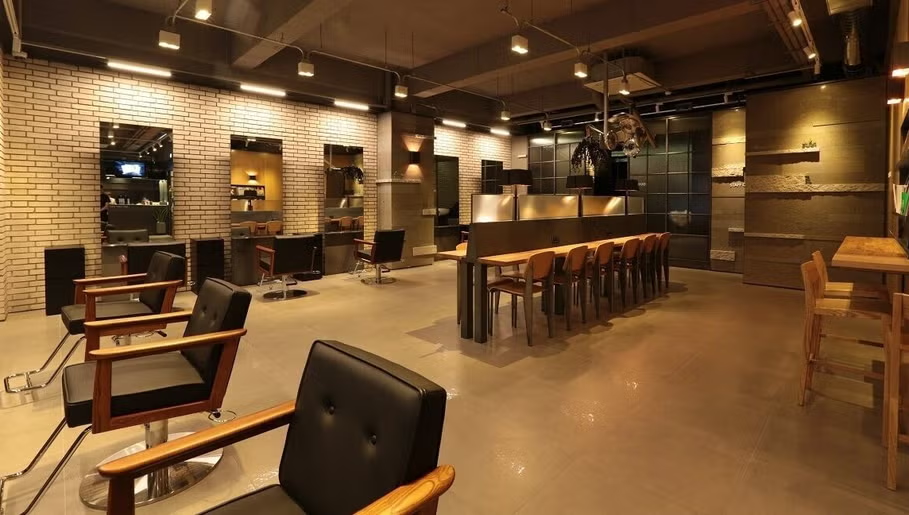
    Getting a haircut in Korea isn’t just about trimming your hair — it’s an experience.
    From the moment you walk in, Korean hair salons offer a level of service, detail, and technology that often surprises newcomers. Whether you’re here for a semester, a work assignment, or long-term living, here’s what makes Korean hair salons unique and what to expect on your first visit.


    1. Most salons are walk-in friendly — but popular ones require booking

    You can walk into many local salons without an appointment, especially in residential areas.
    However, trendy or well-known shops in places like Hongdae, Gangnam, or Seongsu often require online booking, sometimes through Naver or Instagram DMs.
    Many salons also list their stylists, portfolios, and price ranges online — choosing a stylist, not just a shop, is common.


    2. The service starts before the haircut

    Once seated, you’ll often be offered a drink, a blanket, even a phone charger.
    Stylists usually consult in detail — asking about preferred length, volume, texture, and even your drying routine.
    They’ll show sample photos on an iPad and confirm step by step, especially if you’re a foreigner unfamiliar with Korean hair trends.

    Korean salons are known for their stylish interiors and top-tier service — brands like JUNO Hair, Lee Chul Hairkerker, and Park Seung-chul Hair Studio are among the most famous nationwide.

    3. Shampoo happens at the bowl — not the sink

    Instead of leaning backward into a sink, you’ll likely be guided to a separate reclining shampoo chair.
    Most salons include scalp massage, warm towels, and hair steaming in the basic shampoo service – without extra charge!
    Some premium salons even offer aroma scalp spa, LED scalp care, and personalized tonic sprays.


    4. Digital perms and C-curls are everywhere

    Korean perms are not the tight curls many foreigners imagine.
    Instead, you’ll hear terms like “C-curl,” “S-curl,” “see-through bangs,” or “Root volume perm.”
    These styles focus on natural waves and soft volume — a big reason Korean perms are popular worldwide.


    5. Price ranges vary widely

    • Small neighborhood salon: ₩20,000–₩40,000 for a basic cut
    • Mid-range trend salon: ₩40,000–₩80,000
    • Luxury Gangnam salon: ₩100,000+ (and perms can go far beyond that)
      Foreigners sometimes notice: stylists wash your hair, cut it, dry it, and style it themselves — instead of switching staff mid-way. It’s part of the “one-person system” that many salons follow.

    6. Tipping is not expected

    Unlike in many Western countries, tipping is not part of Korean salon culture.
    A sincere “감사합니다!” is enough, and some people leave a good review instead.


    Quick Tips Before You Go

    • Bring a photo — Korean stylists love visual references.
    • If you have very curly or textured hair, choose a salon experienced with global styles (search “foreigner-friendly hair salon Seoul”).
    • Many salons open until 9–10 PM, especially in big cities.

    Whether you’re getting your bangs trimmed or a full digital perm, Korean hair salons turn a simple haircut into a relaxing, carefully guided experience.
    It’s no wonder people say: “You don’t just get your hair done — you get pampered.”

  • Outlet Destinations Near Seoul for a Stylish Shopping Day Trip

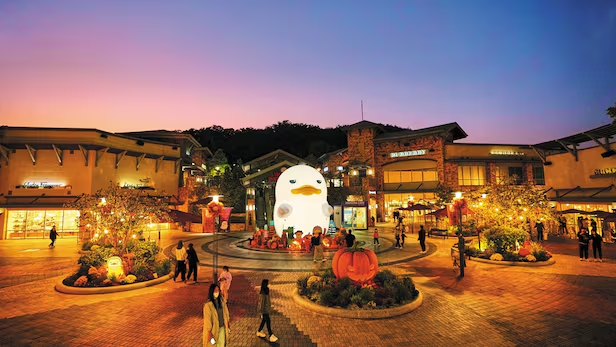
    If you’re looking to combine shopping and a relaxing day out, Seoul’s suburban outlets offer a perfect escape. Away from the buzz of the city but still within easy reach, these destinations deliver premium brands, scenic surroundings, and unique experiences—all at outlet prices. Whether you’re on the hunt for luxury bargains, a peaceful lakeside stroll, or a last-minute shopping spree before your flight, here are four outlets near Seoul worth adding to your itinerary.


    1. Yeoju Premium Outlets (신세계 여주 프리미엄 아울렛)

    As Korea’s first and largest premium outlet, Yeoju Premium Outlets remains the pinnacle of suburban shopping. It offers the widest selection of luxury brands including Gucci, Prada, Moncler, and Balenciaga, alongside top Korean brands like Wooyoungmi—whose only dedicated outlet store in Korea can be found here. It also ranks as the top-performing outlet in the country.

    Yeoju itself is known for its high-quality rice, and just near the outlet you’ll find several traditional hanjeongsik (Korean full-course set meal) restaurants. After shopping, sitting down to a hearty Korean-style meal is the perfect way to end the day.

    Getting there is also simple: direct buses run from Seoul Express Bus Terminal (about 1 hour, one-way for ₩6,400), and Hana Tour offers charter buses from Hongdae and Hoehyeon Station (round-trip for about $10).


    2. Lotte Premium Outlets – Uiwang Branch (롯데 프리미엄 아울렛 의왕점)

    Located just an hour from Gangnam, this outlet blends shopping with relaxation under its “rest in nature” concept. Featuring brands like Max Mara, Coach, and Etro, the structure incorporates open-air walkways that blend seamlessly into the surrounding greenery. Nearby attractions, such as Baegun Lake and Uiwang Moomin Park, also make it a fun day trip destination.

    If you’re staying in Gangnam, Uiwang is especially convenient to visit—just hop on the G3900 bus at Yangjae Station, and you’re there in about an hour. It’s ideal for those seeking a stress-free escape from the city without venturing too far.


    3. Hyundai Premium Outlets – SPACE 1 (현대 프리미엄 아울렛 스페이스원)

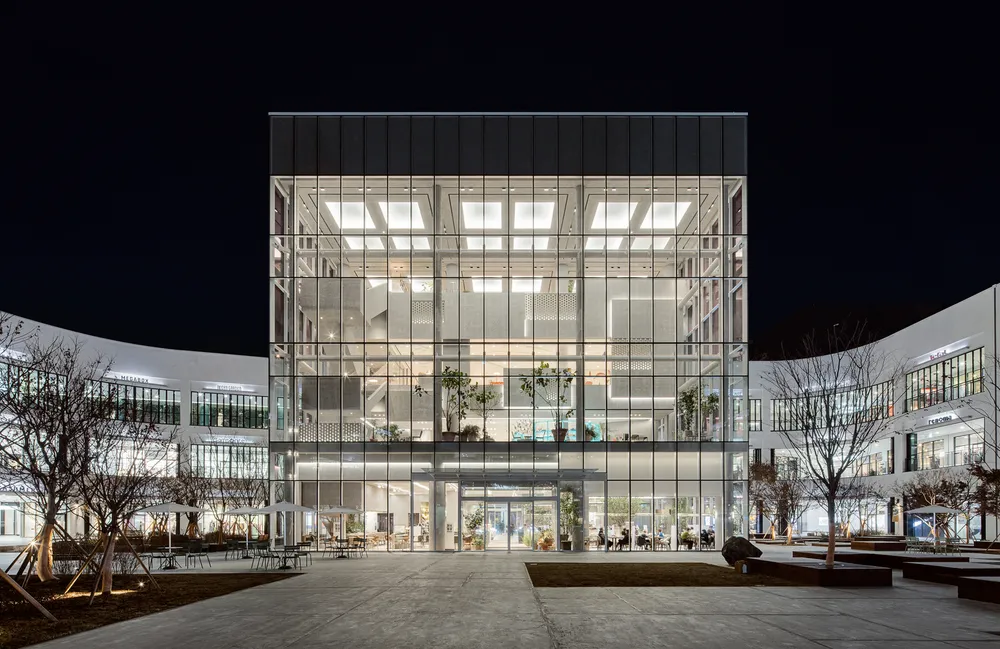
    SPACE 1 stands out from other outlets with its “vertical mall” design—it’s a multi-level complex featuring luxury brands like Valentino, Hugo Boss, and Vivienne Westwood, alongside Korean favorites like Beanpole and Hazzys. There’s even a Megabox Dolby Cinema on-site, making it a perfect place to mix shopping and entertainment.

    Located near Dasan Station on Seoul Metro Line 8, it’s incredibly accessible if you’re staying in areas like Jamsil or the southeastern part of Seoul. Spend the day browsing, catch a movie, and enjoy a relaxing dining experience—all under one roof.


    4. Hyundai Premium Outlets – Gimpo Branch (현대 프리미엄 아울렛 김포점)

    Just a short taxi ride from Gimpo or Incheon Airports, this outlet is a popular pre-departure shopping spot for foreigners. It houses an impressive lineup of brands including Gucci, Burberry, Jimmy Choo, Tod’s, Max Mara, Salvatore Ferragamo, and more. There’s also a specialized golf section, making it a must-visit for golf enthusiasts seeking apparel or equipment at great prices.

    While public transportation options may require more transfers, if you’re staying in southwest Seoul (e.g. Yeouido or Sindorim), a taxi will get you here in 20–30 minutes for ₩10,000–20,000—very reasonable for the convenience. Keep an eye out for special events like the Riverside Fireworks Festival at the WEST Water Plaza during seasonal celebrations.


    Whether you’re a dedicated bargain hunter or just love exploring new shopping destinations, these four outlets near Seoul offer more than just discounts. They blend premium retail, culture, and nature—all within reach of the city. Perfect for day trips, weekend plans, or a stylish detour before your flight, they’re a great way to experience a different side of Korea’s shopping scene.

  • Celebrate with a Bang: Hanwha Eagles’ 40th Anniversary Fireworks Festival in Daejeon

    On November 30, 2025, the city of Daejeon will light up with a spectacular fireworks festival hosted by the Hanwha Eagles, one of Korea’s beloved professional baseball teams. In celebration of the team’s 40th anniversary, the festival promises an unforgettable night along the Gapcheon River near Expo Park, starting at 7:00 PM.

    A night when baseball magic meets fireworks – the Hanwha Eagles celebrate 40 years with a sky full of color in Daejeon.

    Visitors can look forward to a dazzling 30-minute multimedia drone show followed by a grand fireworks display. This fusion of modern drone technology with traditional pyrotechnics makes for a unique experience that goes beyond a typical fireworks show.

    Starting at 4:00 PM on the same day, there will also be a special fan signing event for 2025 season membership holders. Details about the venue and participation method will be announced soon via the team’s official social media channels, so keep an eye out if you’re planning to attend.

    The event is not just for baseball fans. According to Hanwha Eagles, the purpose behind this celebration is to give back: “Our goal has always been to bring joy and happiness to the lives of our fans and the citizens of Daejeon. This festival is our way of saying thank you for 40 years of love and support.”

    Whether you’re a baseball lover, a festival enthusiast, or just in search of a memorable night out in Korea, this event is one not to miss. Bring your friends, find a cozy spot along the riverside, and immerse yourself in a colorful evening of celebration and community spirit.

    Event Snapshot

    • Date & Time: November 30, 2025, 7:00 PM
    • Location: Gapcheon River (near Expo Park), Daejeon
    • Highlights: Multimedia drone show, fireworks display, fan signing event (from 4:00 PM)

    Mark your calendar and get ready to experience Daejeon like never before!

  • Three Things to Know About Korea’s College Entrance Exam Day

    On November 13, 2025, Korea will hold one of its most important national events — the College Scholastic Ability Test, better known as “Suneung (수능)” in Korea.
    It’s not just an exam day; it’s a nationwide event that brings the entire country to a gentle pause. From working hours to flight schedules, everything is adjusted to help students who have spent years preparing for this one day. Here are three fascinating facts about how Korea changes on Suneung day.


    1. Later work hours to clear the roads

    On Suneung morning, many government offices and companies delay their opening hours to 10 a.m..
    This nationwide adjustment helps reduce traffic congestion so that test-takers can reach their exam centers smoothly. Because of this, public transportation in the morning is unusually calm, with subways and buses running more freely than usual. The whole morning feels quieter — almost as if the entire city is wishing students good luck.


    2. Police escort services for late students

    If a student oversleeps or gets stuck in traffic, it’s not the end of the world — the police are ready to help.
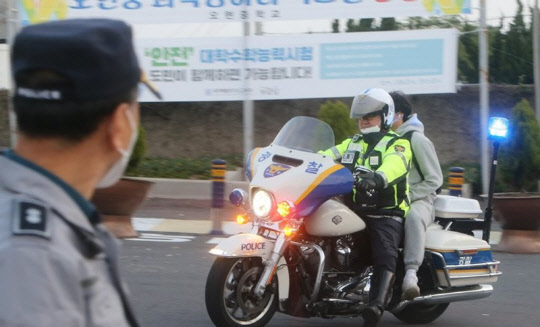
    Every year, police officers offer emergency escort services, using patrol cars or motorcycles to quickly get late students to their test centers. It’s one of those uniquely Korean moments when everyone — even law enforcement — works together to make sure no one misses the biggest exam of their life.

    It’s a familiar sight on Suneung day — a police officer giving a last-minute ride to a student running late for the college entrance exam.

    3. Even airplanes stop flying during the English listening test (Nov. 13, 2025)

    During the English listening section, which takes place from 1:05 p.m. to 1:40 p.m. this year, absolute silence is required across the country.
    To make this possible, the Ministry of Land, Infrastructure and Transport will suspend all domestic takeoffs and landings nationwide for 35 minutes. On November 13, 2025, around 140 flights will be rescheduled to prevent any noise interference. It’s a remarkable example of how seriously the nation treats the exam — even the skies go quiet for the students’ dream.


    A small gesture that goes a long way

    If you have a Korean friend taking the exam — or know someone whose sibling or child is — take a moment to send them a word of encouragement.
    A simple “Good luck!” or a small chocolate gift can bring a smile to someone who’s been studying for years for this moment.

    On Suneung day, the entire country moves a little slower, speaks a little softer, and cheers — quietly but wholeheartedly — for its students.

  • Korean University Calendar: Month by Month

    If you’re planning to study in Korea as an exchange student, it’s helpful to know how the academic year works. Unlike many Western countries that start in September, Korean universities begin their first semester in March and the second semester in September. Here’s what a typical year looks like on campus.


    March (3월)

    The spring semester begins, and campus life bursts into energy.
    New students arrive, orientation events take place, and student clubs (동아리) actively recruit new members. It’s one of the most exciting times of the year to experience Korean university culture.


    April (4월)

    This is midterm exam season for most universities.
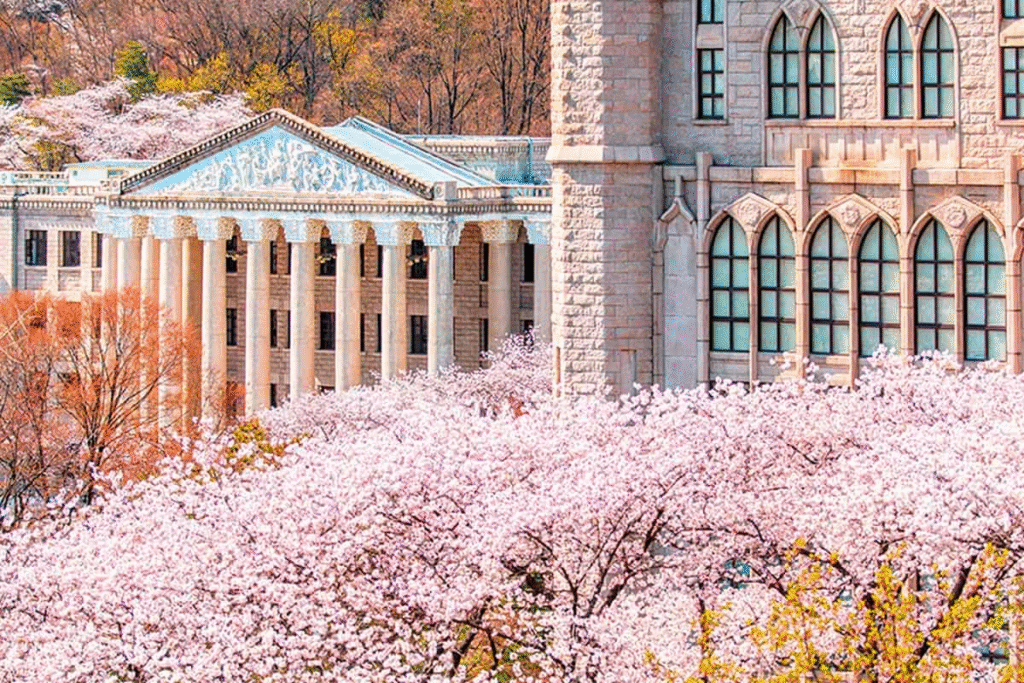
    Interestingly, it often overlaps with cherry blossom season, which makes students a little sad — they can see the pink flowers only briefly between study sessions!

    Kyunghee University in Seoul is famous for its beautiful cherry blossoms in April.

    May (5월)

    A month of university festivals.
    Many campuses host outdoor concerts, food booths, and celebrity performances. It’s a great time to meet friends, relax, and enjoy the liveliest side of Korean campus life.


    June (6월)

    Final exams mark the end of the semester.
    After the exams, students begin their long-awaited summer vacation.


    July–August (7월–8월)

    Summer break.
    Most students travel or work part-time, but universities also offer summer sessions (계절학기) in July for those who want to earn extra credits or retake classes.


    September (9월)

    The fall semester begins.
    Although not as hectic as March, student clubs and academic societies still recruit new members, and the campus regains its busy atmosphere after the summer.


    October (10월)

    It’s midterm season again, and autumn colors fill the campus.
    After exams, many universities organize sports festivals or athletic meets, reflecting Korea’s traditional custom of holding community sports events in the fall.
    It’s a lively time filled with team games, cheering, and outdoor activities that strengthen campus spirit.


    November–December (11월–12월)

    Final exam period usually runs from late November to early December, marking the close of the second semester. After exams, campuses become quiet as students prepare for winter vacation.


    January–February (1월–2월)

    Winter break.
    January often includes winter session courses, while February is graduation season — a time of ceremonies, farewells, and new beginnings.


    Tip: Korean universities usually publish their academic calendars 6–12 months in advance, so be sure to check your host university’s website before planning travel or exchange activities.

  • Exploring Seoul by River: The Return of the Han River Bus

    If you’ve ever walked along the Han River and wondered what it would be like to travel across it — not just beside it — Seoul now gives you that chance. The Han River Bus (한강버스) has officially resumed operation, offering a fresh, scenic way to explore the city. More than just public transportation, it’s a moving viewpoint of Seoul’s skyline, parks, and bridges — perfect for international students or travelers looking for a new way to experience the city.


    1. What Is the Han River Bus?

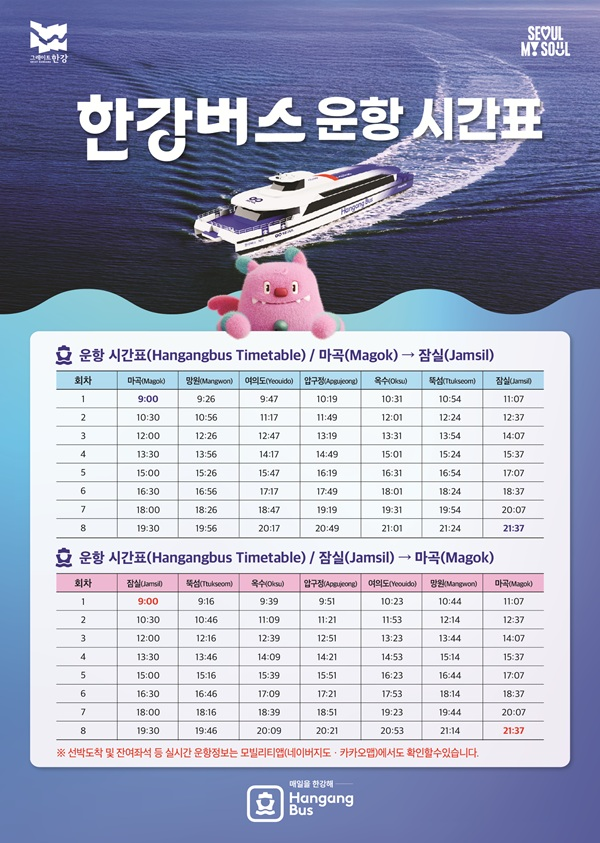
    After years of planning and a trial phase, the Han River Bus officially returned to service in November 2025. Operated by the Seoul Metropolitan Government, the route runs roughly 28.9 kilometers, connecting major riverfront districts from Magok in the west to Jamsil in the east.

    Currently, there are about 14 trips per day, with intervals of roughly one hour. As ridership grows, Seoul plans to expand the service to include express lines during commuter hours and additional weekend sailings.

    Think of it as a hybrid between a ferry and a bus — affordable, comfortable, and full of beautiful city views.


    2. Why You Should Try It

    For foreign residents or travelers, the Han River Bus isn’t just a ride — it’s a chance to see the rhythm of local life along the water. You’ll glide past riverside parks, cycling paths, and Seoul’s most famous bridges, all while avoiding traffic and subway crowds.

    Seoul’s roads can get heavily congested during rush hours, and subways are often packed to capacity. The Han River Bus offers a calm, scenic alternative to the usual city commute — a way to travel across Seoul without the stress of traffic jams or crowded trains.

    The route connects several must-see districts, so it can double as a mini city tour. It’s also a fun, eco-friendly alternative for your weekend outings with friends or visiting family.


    3. Routes and Dock Stops

    The main route runs between seven key docks:
    Magok → Mangwon → Yeouido → Apgujeong → Oksu → Ttukseom → Jamsil

    Each dock connects easily to nearby subway stations and city buses, and some — like Magok, Apgujeong, and Jamsil — even offer free shuttle buses from the nearest stations.

    An express route is scheduled to open soon, stopping only at major docks like Magok–Yeouido–Jamsil for faster commuting.


    4. Ticket Prices and Payment

    • Adult fare: ₩3,000
    • Youth (13–18 years): ₩1,800
    • Children (6–12 years): ₩1,100

    Payment is made via transportation cards such as T-money or compatible apps — cash is not accepted.

    If you’re already using the Climate Companion Card (기후동행카드), you can add just ₩5,000 for unlimited Han River Bus rides within its validity period. It’s an affordable and sustainable option for frequent travelers.


    5. Travel Tips

    • Best time to ride: Late afternoon for sunset views, or after dark for the illuminated bridges and night view of the city.
    • Bring your T-money card: No card, no boarding.
    • Check schedules online: Timetables may change with weather or events.
    • Accessibility: Onboard spaces are designed for strollers, wheelchairs, and even bicycles.

    6. A New Way to See Seoul

    The Han River Bus isn’t just transportation — it’s part of Seoul’s new identity, reconnecting the city with its most iconic landmark. It’s also a comfortable and affordable way to explore, relax, and see Seoul from a new angle.

    And for daily commuters, it can be a refreshing alternative to the city’s congested roads and crowded subways, especially during rush hours. You can skip the gridlock, enjoy the breeze, and still get where you need to go — all while taking in one of the best views Seoul has to offer.

    Whether you’re commuting to class or work, heading to Yeouido for a picnic, or simply chasing sunset views over the river, the Han River Bus gives you a journey worth taking — one wave at a time.

  • Everyday Etiquette in Korea: 3 Habits You Should Know Before Moving In

    Living in Korea can be an amazing experience — delicious food, efficient transportation, and a fascinating blend of modern and traditional life. But if you’re new here, you might notice that some everyday habits are quite different from what you’re used to. Understanding and respecting these customs will help you adjust more smoothly and avoid awkward moments. Here are three daily habits to keep in mind.


    1. Take Off Your Shoes Indoors

    In Korea, it’s customary to remove your shoes before entering someone’s home — and this tradition goes back centuries. Koreans value cleanliness and believe that the indoors should be a space free from outside dirt. Most homes have a small entry area called a 현관 (hyeon-gwan) where you take off your shoes before stepping onto the main floor.

    If you’re invited to someone’s house, never walk inside with your shoes on. It’s considered disrespectful. Even when you rent an apartment, landlords generally expect you to follow this rule. Many Koreans keep separate indoor slippers (실내화) for comfort and hygiene. So, remember: shoes off at the door!


    2. Rinse, Don’t Soak, When Doing the Dishes

    Here’s something that surprises many foreigners — in Korea, people usually don’t fill the sink with water and soap to soak dishes. Instead, they wash each dish with detergent first and then rinse everything thoroughly under running water.

    Why? Many Koreans think soaking dishes in soapy water is unhygienic because the dirty water can spread bacteria or leave residue. It’s also part of a broader cultural emphasis on visible cleanliness and freshness. If you’re living with Korean roommates or using a shared kitchen, it’s good manners to follow this practice — it’ll definitely be appreciated!


    3. Master the Art of Recycling

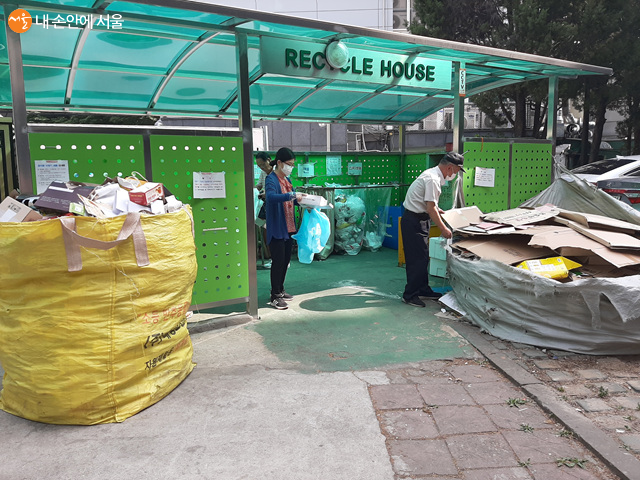
    Korea takes recycling very seriously. Every neighborhood and apartment complex follows strict recycling rules, often with designated bins for plastic, paper, glass, cans, and general waste. You’ll also see special bins for food waste (음식물 쓰레기), which must be separated from regular trash.

    In many apartment buildings, you can only take out recyclables on specific days of the week — and local authorities can even issue fines for improper disposal. It might take a little time to learn what goes where, but you can always use Google or Naver and it’s definitely worth it for the environment. Clear labeling and color-coded bins will help, and neighbors or building managers are usually happy to explain the rules.


    Living Mindfully in Korea

    Getting used to these habits may take a few weeks, but they’re easy to adopt and show respect for local customs. From leaving your shoes at the door to sorting your recyclables correctly, these small actions will help you blend into Korean daily life — and make your stay smoother, cleaner, and more enjoyable.

    Welcome to your new home in Korea, where good manners truly start at the doorstep.