If you’ll be in Seoul this winter, mark your calendar: the 2025 Geminid Meteor Shower will reach its peak on December 13–14, and it’s expected to be one of the brightest and most reliable meteor showers of the year. Even better — you can enjoy it right here in Seoul, as long as you choose the right viewing spot.
Below is your complete guide to when to watch, what to expect, and where in Seoul you’ll have the best chance of catching those fast, bright streaks across the winter sky.
1. Peak Time: When You Should Look Up
The Geminids are famous for producing 120–150 meteors per hour at peak — one of the strongest meteor showers annually.
Best viewing window (Seoul time):
- December 13 (Sat) late evening → December 14 (Sun) early morning
- Most active between 10:00 PM and 3:00 AM
- Visible with the naked eye — binoculars and telescopes actually make meteors harder to see
Since lunar brightness in 2025 is expected to be low during the peak, conditions are especially good even in a bright city like Seoul.
2. Best Places in Seoul to Watch the Meteor Shower
Seoul’s light pollution can make stargazing tricky, but there are still several elevated, open, and surprisingly dark spots where the Geminids are visible.
Ansan Park (안산공원, Seodaemun)
Accessible and spacious, with trails leading up to areas where the skyline opens nicely.
Great if you want a quiet, relaxed viewing experience close to the city center.
Dream Forest (북서울 꿈의 숲)
A wide, open park in northern Seoul with fewer high-rise buildings and less light pollution than central districts.
You can lie down on the grass, look straight up, and enjoy long stretches of sky without obstructions.
Bugaksan Palgakjeong Pavilion (북악산 팔각정)
A classic night-view spot overlooking all of Seoul.
High altitude + panoramic views = one of the best chances to spot bright meteors.
It’s windy in winter, so bundle up.
Naksan Park (낙산공원, Jongno/Daehangno area)
Famous for night city views, but also excellent for stargazing because parts of the park have surprisingly dim lighting.
Easy access makes it popular for casual meteor watching.
Eungbongsan (응봉산)
A small mountain with wide-open sky views and minimal tree cover.
If you prefer a quiet hill with fewer crowds, this is a good choice.
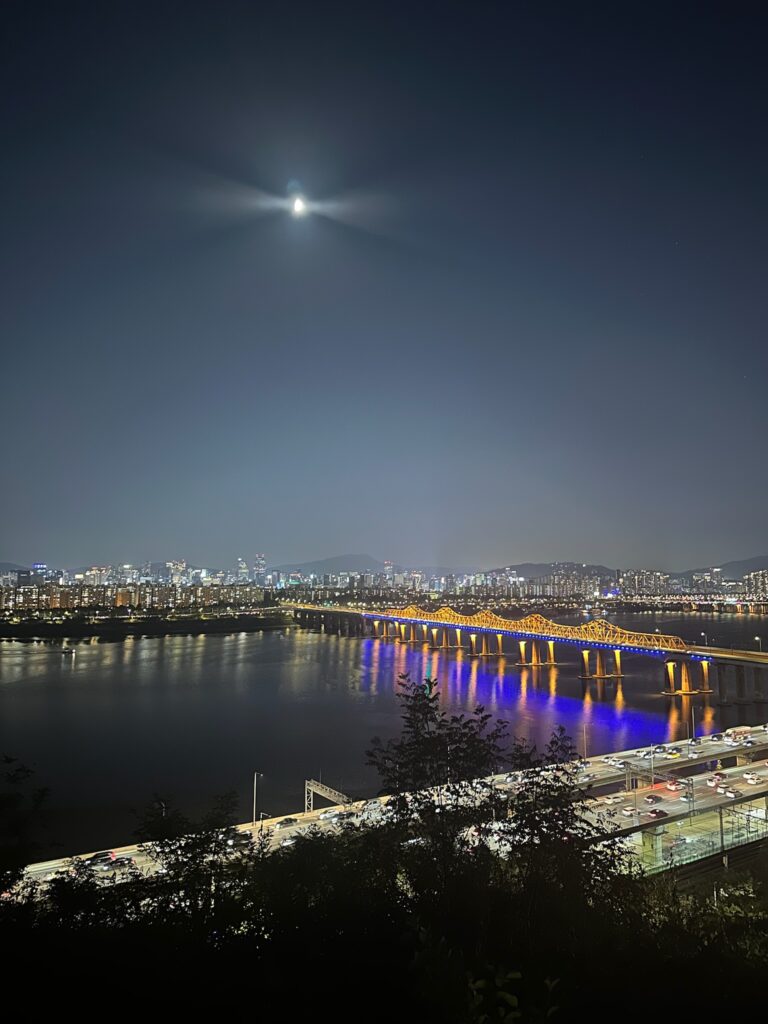
Noeul Park (노을공원, Sangam World Cup Park)
One of the best sunset parks in Seoul — and equally great for meteor showers.
It’s elevated, open, and far from major traffic lights, giving you one of the widest skies in the city.
3. Tips to Make Your Meteor-Watching Night Better
- Bring warm layers — December nights in Seoul can drop below freezing.
- Use your phone minimally — bright screens will ruin your night vision.
- Give your eyes 15–20 minutes to adjust to the darkness.
- Avoid areas near streetlights or tall buildings.
- Look at the entire sky, not just one direction — Geminids can appear anywhere.
4. Why the 2025 Geminids Are Worth Watching
- High meteor rate (120–150 per hour)
- Bright, slow meteors that are easy to spot
- Moonlight interference is expected to be minimal
- An ideal event for both beginners and astronomy lovers
If you’re spending December in Seoul, this is one of the most magical winter experiences you can have — completely free, and unforgettable.
Leave a Reply