Choosing where to live is one of the biggest decisions you’ll make as an exchange student in Korea. Your housing will shape not only your daily routine, but also how deeply you experience campus life and Korean culture.
From budget-friendly options to more private living, Korea offers several distinct housing styles—each with clear pros and trade-offs. Below are four common housing options for exchange students, explained from a foreigner’s perspective.
1. University Dormitory (기숙사)
University dormitories are often the first choice for exchange students, and for good reason. They are usually the cheapest option and located right next to campus, saving both time and transportation costs. Living in a dorm also makes it easy to meet other international and Korean students, especially during your first semester.
However, getting a spot is not guaranteed. Many Korean universities have limited dorm capacity, and competition can be high—even for exchange students.
Another important point is that Korean dorms often have rules that may feel restrictive to some foreigners. Curfews, guest limitations, and shared rooms are common, which can be inconvenient if you value flexibility or privacy.
2. One-Room Apartment (원룸)
A one-room apartment is the most expensive option, but it offers the highest level of independence and privacy. You get your own space, your own bathroom, and full control over your daily schedule. For students who value quiet time, remote study, or personal routines, this option can feel the most comfortable.
That said, costs can add up quickly. In addition to rent, you may need to pay a security deposit, utilities, and sometimes maintenance fees. Finding a one-room also requires more effort, often involving real estate agents and Korean-language contracts. Still, for those who can afford it, this option provides the closest experience to living like a local.
3. Goshiwon (고시원)
Goshiwons are small, private rooms originally designed for exam takers, but they have become popular among students and short-term residents. They are usually one of the cheapest housing options and work well if your stay is short or your plans are not fixed. Most goshiwons are fully furnished, and some include free rice, noodles, or even basic meals.
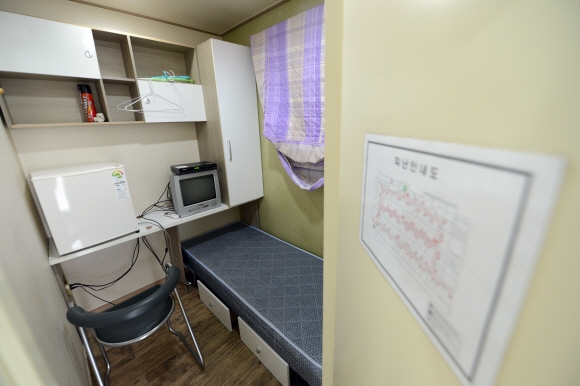
The downside is space and comfort. Rooms are very small, and noise can be an issue due to thin walls. Bathrooms may be shared, depending on the building. While goshiwons are practical and budget-friendly, they can feel cramped over time—especially for students staying a full semester or longer.
4. Hasukjip (하숙집)
Hasukjip is a traditional Korean boarding house, often run by a local family. This option is ideal if you want to experience Korean daily life more closely. Many hasukjips include home-cooked meals (usually for breakfast and dinner), which can be a big advantage if you’re not used to cooking in Korea and ready to try various home-cooked Korean dishes.
On the other hand, privacy can be limited. Bathrooms are sometimes shared, and house rules may apply. Since you’re living in someone’s home, the experience depends heavily on the host family’s style. For students who value cultural immersion over independence, a hasukjip can be a meaningful and memorable choice.
Koodeep Tip
There’s no single “best” option—only what fits your budget, personality, and priorities. Dorms are great if you get in, one-rooms offer freedom, goshiwons save money, and hasukjips provide cultural depth. Before choosing, think about how you study, socialize, and recharge. Your housing choice will quietly shape your entire exchange experience in Korea.
Leave a Reply