Author: koodeep

  • Why BTS Concert 2026 Is the Perfect Reason to Visit Korea

    Seeing BTS live in Korea is already special. But what makes this tour truly worth planning a full trip around is when it happens. With concerts expected in April (Goyang) and June (Busan), the timing aligns almost perfectly with two of the best travel seasons in Korea. From cherry blossoms to early summer breezes, these months let you experience the country at its best—both on and off the stage.


    Why April Is Perfect for Traveling to Korea (Goyang Concert)

    April is widely considered the best month to travel in Korea. The weather is comfortably warm, yet not hot, with clear skies that make walking around cities and parks genuinely enjoyable. Unlike summer, there’s no humidity, and unlike winter, no heavy layers are needed—ideal conditions for first-time visitors and packed concert schedules.

    What truly sets April apart is cherry blossom season. Korea’s cherry blossoms bloom spectacularly but briefly, and in the Seoul metropolitan area, peak bloom is usually expected between the first and second week of April. This timing matches almost perfectly with the Goyang concerts, meaning you can attend the show and still enjoy peak spring scenery.

    Ilsan Lake Park is one of the easiest cherry blossom spots to visit from Goyang Stadium – only 20 minutes walk from the stadium.

    If you’re staying near Goyang Stadium, Ilsan Lake Park is one of the easiest cherry blossom spots to visit, offering wide paths, lakeside views, and a relaxed local atmosphere. Closer to central Seoul, Sinchon transforms with blossom-lined streets around university campuses, while Yeouido is one of Korea’s most famous cherry blossom destinations, known for long riverside paths filled with trees in full bloom. In April, even a simple walk after the concert can turn into a postcard moment.

    Beyond flowers, April also means fewer crowds compared to peak summer, better hotel availability, and perfect conditions for café hopping, walking tours, and day trips—all without rushing back indoors because of the heat or cold.


    Why June Is Ideal for Traveling to Korea (Busan Concert)

    June offers a very different, but equally appealing, side of Korea. It marks the beginning of summer, yet temperatures are still manageable, especially compared to July and August. Importantly, the monsoon season usually arrives toward the end of June, which means early- and mid-June often remain dry, sunny, and travel-friendly.

    This is where Busan truly shines. As Korea’s most loved summer travel destination, Busan comes alive in early summer. Cool sea breezes make coastal areas comfortable even during the day, and evenings by the water feel refreshing rather than hot. Staying near beaches like Haeundae or Gwangalli allows you to enjoy the ocean, night views, and open-air cafés—something Seoul simply can’t offer.

    Summer night walk along Haeundae beach can be a mesmerizing moment,

    June is also an excellent time to enjoy outdoor food markets, seaside walks, and late-night city views without the intense crowds and heat of peak summer vacation season. The atmosphere feels relaxed yet lively, making it easy to balance concert excitement with real downtime.


    A Concert That Becomes a Season, Not Just a Night

    What makes this BTS tour special isn’t only the performances—it’s the timing. April and June sit right in Korea’s sweet spot for travel, offering ideal weather, seasonal scenery, and smoother logistics compared to peak tourist months. Add efficient public transportation, world-class food, and distinct regional experiences between Seoul and Busan, and the concert becomes more than an event—it becomes the centerpiece of a memorable Korean journey.

    If you’ve ever thought about visiting Korea, this is the kind of timing that turns “maybe someday” into “this is it.”

  • Too Expensive to Stay in Busan? Smart Nearby Alternatives During the BTS Concert

    As BTS’s Busan concerts approach, hotel prices across the city have surged sharply. Recent reports show that accommodation rates in central Busan and popular tourist areas have spiked during the concert period, making it difficult for many fans to find reasonably priced places to stay.

    The good news is that Busan is surrounded by well-connected cities that offer much better value, without sacrificing convenience. If you’re traveling on a budget—or simply don’t want to overpay—these nearby cities are worth serious consideration.

    1. Yangsan – The Closest and Easiest Alternative

    Yangsan is a small but well-developed city located just north of Busan, often overlooked by international travelers. If the concert is held at Busan Asiad Main Stadium, Yangsan is only about 30 minutes away by taxi, with fares around KRW 20,000, making it surprisingly accessible. Yangsan is also connected to Busan via Subway Line 2, which means you can reach central Busan without relying solely on taxis.

    Compared to Busan city hotels, accommodation prices in Yangsan are noticeably lower, while still offering clean, modern options. For fans who want to stay close without paying peak Busan prices, Yangsan is one of the most practical choices.

    2. Gimhae – Great Transport and Easy Travel

    Gimhae is another strong alternative, especially for travelers arriving by air. Located near Gimhae International Airport, this city offers excellent transportation links, including the Busan–Gimhae Light Rail Transit, which connects directly into Busan’s subway network. From Gimhae to Asiad Main Stadium, the journey is also around 30 minutes by taxi, typically costing about KRW 20,000.

    Beyond convenience, Gimhae has a relaxed atmosphere, plenty of local restaurants, and a reputation for being easy to navigate. It’s a comfortable base for fans who want affordability without feeling too far removed from Busan.

    3. Changwon – More Distance, More Flexibility

    Changwon is a larger planned city located west of Busan, and while it’s farther from Asiad Main Stadium—roughly 40 to 50 minutes by taxi, with fares around KRW 40,000—it offers unique advantages. As a well-designed city, Changwon has spacious hotels with modern designs, wide roads, and generally better availability during peak periods.

    Staying here also opens up additional travel options: you can explore Masan and Jinhae, famous for coastal scenery and local food, or even extend your trip toward Tongyeong and Geoje Island, two of southern Korea’s most beautiful destinations. If your BTS trip doubles as a broader southern Korea itinerary, Changwon can be a surprisingly strategic base.

    Changwon can be a surprisingly strategic base if you are planning a trip to Tongyeong, often called “the Korean Naples” with its scenic ocean view.

    When concert demand pushes Busan hotel prices beyond reason, looking just outside the city can make a huge difference. Yangsan, Gimhae, and Changwon all offer better value, manageable travel times, and different travel experiences, depending on your priorities. For budget-conscious fans—or travelers who prefer a calmer stay—these cities prove that you don’t actually have to sleep in Busan to enjoy a Busan concert.

  • How Foreigners Can Access CCTV Footage in Korea When Something Goes Wrong

    Korea is widely known for its strong public safety and low crime rate, but that doesn’t mean problems never happen. Minor theft, hit-and-run accidents, or unexpected traffic incidents can affect anyone—foreign residents included.

    When something like this happens, many foreigners feel stuck, not because evidence doesn’t exist, but because they don’t know who to ask or how to ask. One of the most powerful tools in Korea is CCTV, and understanding how to legally access it can make a real difference.


    1. Can You Legally Request CCTV Footage in Korea?

    Yes. Under Korean law, if you yourself are captured in CCTV footage—for example, as a victim of an incident—you are considered an “information subject” and have the right to request access to that footage. This right is guaranteed under the Personal Information Protection Act. Importantly, police presence or a police report is not a legal requirement just to view CCTV footage.

    The Korean National Police Agency has made it clear that CCTV managers (such as apartment offices or store owners) must allow victims to view footage in which they appear. If other people appear in the video, their faces or identifying features can be blurred or masked, but the footage itself cannot be refused simply because it contains other individuals.


    2. How to Access Public CCTV (Crime-Prevention & Traffic Cameras)

    If the CCTV is installed in a public place—such as streets, alleys, parks, or intersections—the footage is usually managed by a local government office or police authority.

    • Neighborhood crime-prevention CCTV (often labeled like “Safety-000” or “Children-000”) is typically managed by the local district office (gu office). You can request access through Korea’s official Information Disclosure Portal(정보공개포털).
    • Traffic CCTV on main roads is often managed by the local police or a city traffic information center. Requests can be made through the relevant police station, especially if the footage is related to an accident.

    In investigation-related cases, CCTV collected by police during an investigation can also be requested by the incident party, once your status as the information subject is confirmed. Any third parties appearing in the footage will be fully blurred, and in some cases, the cost of masking may be charged to the requester.


    3. Can Foreigners Request CCTV Footage? – Absolutely Yes.

    Foreigners have the same legal rights as Koreans when it comes to accessing CCTV, as long as they meet basic residency conditions. The law explicitly allows information disclosure requests by foreigners who either (i) reside in Korea with a registered address, or (ii) are temporarily staying in Korea for academic or research purposes.

    In practice, this means most foreign residents—workers, students, exchange students, and long-term visitors—are fully eligible to request CCTV footage through the same procedures as Korean citizens.


    4. Practical Tips Foreigners Should Know

    Timing is critical. Many CCTV systems only store footage for about 30 days, sometimes less. If you think CCTV might be relevant, act quickly.

    When viewing footage, it’s often allowed to record the screen using your smartphone, as long as other people’s faces are already blurred. This is a practical way to preserve evidence before the footage is deleted.

    Also, don’t overlook private CCTV. In Korea, many small shops, cafés, parking garages, and convenience stores have their own cameras. If an incident happens nearby, it’s often effective to politely ask surrounding businesses whether their cameras captured the area. Store owners are generally cooperative, especially when you explain you are the victim.

    Finally, if a CCTV manager unreasonably refuses access despite your clear appearance in the footage, they may face administrative fines under Korean law. Complaints can be filed with the Personal Information Protection authorities, though in most everyday situations, calm explanation and understanding of your rights are enough to move things forward.


    Knowing how CCTV access works in Korea turns uncertainty into control. For foreigners living here, this knowledge can be the difference between feeling helpless and confidently protecting your rights when something unexpected happens.

  • Where to Stay for BTS Concerts in Busan: Best Hotel Areas to Consider

    BTS is set to bring their world tour to Busan in June 2026, and while the exact venue has not yet been officially confirmed, many fans expect the concert to take place at Busan Asiad Main Stadium, a venue that has hosted major BTS concerts back in 2022.

    If you’re traveling to Busan specifically for the show—or planning to turn the concert into a longer summer trip—choosing the right area to stay will make a big difference. Busan is spread out, but with the right base, getting to the stadium and enjoying the city can both be easy.

    1. Seomyeon – The Best All-Around Base in Busan

    Seomyeon is Busan’s most vibrant downtown area and one of the best places to stay for first-time visitors. It’s packed with hotels, restaurants, cafés, bars, and shopping streets, making it ideal for fans who want to enjoy Busan’s nightlife before and after the concert.

    Transportation-wise, Seomyeon is especially convenient because Subway Lines 1 and 2 intersect here, allowing easy access not only to the Asiad Stadium area but also to beach destinations like Haeundae and Gwangalli. If you want a balance of convenience, energy, and accommodation options, Seomyeon is often the safest and most flexible choice.

    2. Busan Station Area – Best for Multi-City Travel

    Staying near Busan Station makes sense if your BTS trip is part of a larger Korea itinerary. Just like Seoul Station in the capital, Busan Station is the city’s main transportation hub, with KTX trains connecting Busan to Seoul and other major cities like Daegu and Daejeon. This area works especially well if you’re heading back to Seoul, moving on to other regions, or arriving late at night by train. While Busan Station itself is quieter at night than Seomyeon, there are plenty of hotels nearby, and subway access makes it easy to reach the stadium and other parts of the city.

    3. Gwangalli & Haeundae – Summer Beach Vibes with a View

    Gwangalli and Haeundae are Busan’s most famous beach areas and the first places many international travelers think of when visiting the city. While these areas are farther from Asiad Main Stadium than Seomyeon or northern districts, they shine in one important way: summer atmosphere.

    Since the Busan concerts are scheduled for June, staying by the sea lets you enjoy cool ocean breezes, beach walks, and iconic coastal views during the hottest part of the day. If you’re willing to trade slightly longer travel time for a classic Busan summer experience, these beach neighborhoods are hard to beat.

    4. Gupo & Deokcheon – Closest and Most Budget-Friendly

    For fans who prioritize convenience and value, Gupo and Deokcheon are highly underrated options. These areas are only about 15 minutes from Asiad Main Stadium by taxi or subway, making concert-day travel extremely easy. Gupo Station is also a KTX stop, and the area is close to Gimhae International Airport, which is ideal for both domestic and international travelers. Compared to central Busan or beach areas, hotels here tend to be more affordable, making this a smart choice if prices spike closer to the concert dates.


    Busan offers very different experiences depending on where you stay—from energetic downtown streets to calm residential areas and iconic beaches. Whether you want nightlife, fast intercity travel, summer ocean views, or the shortest ride back from the concert, these four areas cover every travel style.

  • Where to Stay for BTS Concerts in Goyang: Best Hotel Areas for International Fans

    With BTS returning to Korea for their 2026 world tour, fans from all over the world are planning trips around the Goyang Stadium shows on April 9 and April 11–12. If you’re flying into Korea or traveling domestically for the concert, choosing the right area to stay can make your entire trip smoother and more enjoyable.

    Goyang sits just northwest of Seoul, which means several Seoul neighborhoods offer excellent access—without forcing you to stay right next to the stadium. Here are the best areas to consider, depending on your travel style.

    1. Hongdae / Sinchon – The Best All-Around Option

    Hongdae and Sinchon are often the top choice for international visitors, and for good reason. Goyang is located in the northwest of Seoul, making this area geographically convenient, and there are direct metropolitan buses (광역버스) that can take you to the Goyang Stadium area without complicated transfers.

    Beyond transportation, Hongdae and Sinchon offer exactly what many overseas fans want: lively nightlife, endless cafés, restaurants, shopping streets, and a wide range of hotels and guesthouses. If this is your first time in Korea, staying here lets you enjoy the concert while also experiencing one of Seoul’s most foreigner-friendly neighborhoods.

    2. Seoul Station Area – Ideal for Fast Transit and Multi-City Travel

    Staying near Seoul Station is another strong option, especially if you plan to travel beyond Seoul after the concert. From Seoul Station, you can take GTX-A directly to Kintex Station, which significantly cuts down travel time to Goyang. GTX trains are faster and more comfortable than regular subways, making concert-day travel less exhausting.

    Seoul Station is also Korea’s main transportation hub, so if you’re heading to Busan, Jeonju, or other cities after the show, this location is extremely convenient. The area around Seoul Station also offers a surprisingly wide range of hotels, from budget options to well-known international chains.

    3. Magok Station Area – A Smart Backup with Great Value

    As concert dates approach, affordable and well-located hotels in Hongdae or near Seoul Station tend to sell out quickly. In that case, Magok Station becomes a very smart alternative. This area has many newer hotels with good quality at relatively reasonable prices, and it’s much quieter than central tourist zones.

    Magok is also close to Gimpo Airport, making it perfect if you’re planning to connect your BTS trip with a quick getaway to Jeju Island. While it’s less lively than Hongdae, that also means fewer crowds and more rest. If traffic is smooth, a taxi ride to Goyang Stadium takes around 30 minutes, which is very manageable on concert days.

    4. Gimpo Hangang New Town – Calm, Affordable, and Surprisingly Close

    For fans who prefer a quieter stay and better hotel prices, the Gimpo Hangang area is worth considering. This planned new-town district is calmer than Seoul, with modern hotels that are often more affordable during peak concert periods. Goyang Stadium is only about a 20-minute taxi ride away, making it one of the closest non-Seoul options.

    Another advantage is nearby shopping, including Hyundai Premium Outlets Gimpo, which is great if you want to combine concert travel with shopping. This area works especially well for fans who value space, calm evenings, and cost efficiency over nightlife.


    For BTS concerts in Goyang, there’s no single “perfect” area—only the one that best matches your travel plans. Whether you want nightlife, fast trains, quiet comfort, or shopping-friendly locations, these four areas cover every style of stay. This is just the beginning of Koodeep’s BTS Korea travel series, designed to help you enjoy the concert and Korea a little deeper.

  • How to Enjoy Winter Running in Korea: The Vinyl Greenhouse Track Experience

    Winter running can be brutal almost anywhere—but Korea has come up with a surprisingly thoughtful solution that many foreign runners find fascinating: the vinyl greenhouse track, often called a vinyl track. Wrapped in transparent vinyl sheets, these outdoor tracks block icy winds while remaining naturally ventilated, creating a space where you can keep training even in the coldest months without charging any fees. It’s a great example of how Korea quietly builds runner-friendly infrastructure, not just for elite athletes, but for everyday citizens as well.


    1. What Is a Vinyl Greenhouse Track?

    A vinyl greenhouse track is a standard outdoor running track temporarily covered with vinyl walls during winter. The goal isn’t to make it “warm” like an indoor gym, but to eliminate the biggest enemy of winter running: wind. Even on days with cold warnings, the temperature inside can be around 8–10°C warmer than outside. That difference alone makes steady running realistic—and enjoyable—throughout January and February.

    Runners often start bundled up, then gradually remove layers as their body heats up. Once you get moving, the effect is immediate: stable pacing, less energy loss, and none of the sharp wind chill that usually ruins winter workouts.


    2. Why Runners Love It (Especially in Winter)

    The biggest advantage is control. Without wind, pace management becomes much easier, similar to running on a treadmill—but with the feel of real ground. Many runners report that their pace and total time closely match treadmill results, which says a lot about how consistent the environment is.

    For foreign runners used to either freezing outdoor runs or crowded indoor gyms, this feels like the best of both worlds. You get space, rhythm, and fresh air, all while avoiding slippery roads and numb fingers.


    3. A Window into Korea’s Runner-Friendly Culture

    What stands out is who uses these tracks. You’ll see casual joggers, serious amateur runners, elderly citizens doing laps for health, university athletes, and even elite track and baseball players training side by side. There’s a shared understanding that the space belongs to everyone.

    Many of these tracks are installed by local governments purely for public health, often after listening to citizen requests. The fact that cities invest in temporary winter infrastructure—rather than telling people to “just go to the gym”—says a lot about Korea’s everyday sports culture.


    4. Things to Keep in Mind Before You Go

    Vinyl tracks are not perfect. Because of safety rules, runners usually must run in only one direction, which can strain joints during long distances. For that reason, they’re better suited for short to mid-distance training rather than half-marathons or beyond.

    There’s also the mental aspect: the scenery doesn’t change, so long sessions can feel repetitive. On busy weekends, large running crews or people stopping for photos can disrupt the flow. Still, for winter base training or tempo runs, many runners find the benefits far outweigh the downsides.


    5. Where to Find Vinyl Greenhouse Tracks Around Seoul

    If you’re curious to try one, here are some well-known vinyl tracks in the Seoul metropolitan area that are popular during winter months:

    • Uijeongbu Sports Complex Track (의정부종합운동장)
      A favorite among local runners in northern Gyeonggi-do, known for its active winter running community.
    • Paju Stadium Track (파주스타디움)
      Convenient for residents in northwest Seoul and nearby satellite cities like Goyang and Ilsan.
    • Ansan Wa~ Stadium Track (안산 와~스타디움)
      Frequently used by both citizens and student athletes.
    • Jeongwang Sports Park (정왕체육공원)
      Popular with runners in Siheung and southern Gyeonggi-do.

    Operating periods are usually limited to the coldest months, so it’s best to check local district announcements during winter.


    6. Why It’s Worth Trying as a Foreigner in Korea

    Running in a vinyl greenhouse track isn’t just about exercise—it’s about experiencing a very Korean kind of practicality. It reflects a culture that values consistency, community health, and small but meaningful solutions to everyday problems.

    If winter has ever been the season when your running routine falls apart, this might be the unexpected motivation you didn’t know you needed.

  • Convenience Store Parcel Delivery in Korea: A Foreigner-Friendly Guide

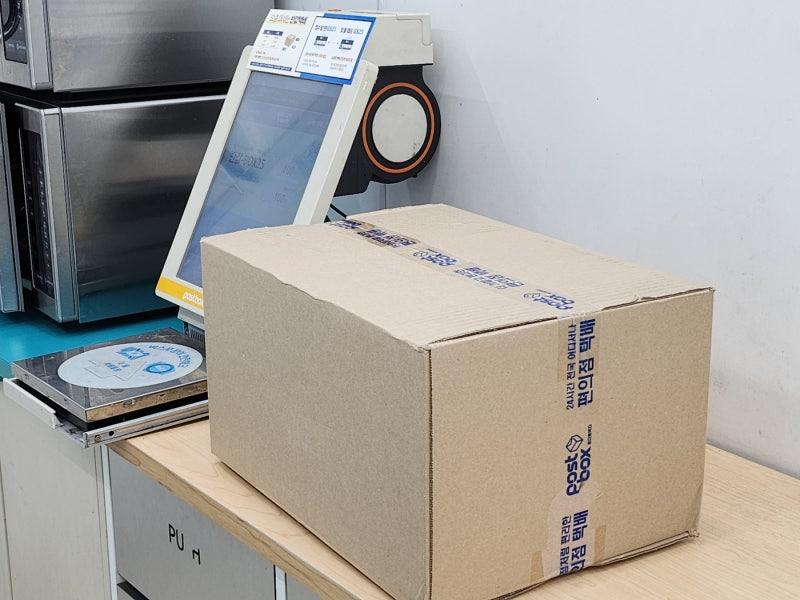
    If you live in Korea, chances are you already step into a convenience store almost every day. What many foreigners discover a bit later—but quickly come to love—is convenience store parcel delivery (편의점 택배). In short, it’s a system that lets you send and receive packages directly through nearby convenience stores, without waiting at home or dealing with couriers during work hours. For anyone living alone, working full-time, or frequently using second-hand marketplaces, it’s one of those quietly brilliant Korean services that makes daily life much easier.


    1. What Is Convenience Store Parcel Delivery?

    Convenience store parcel delivery allows you to drop off a package at a convenience store or receive a package at a convenience store instead of your home. Because stores operate 24/7 and are everywhere, you can send parcels late at night, early in the morning, or whenever it fits your schedule. For foreigners who may not be comfortable coordinating deliveries in Korean—or who don’t want their home address shared—this system feels especially practical and secure.


    2. Why Foreign Residents Find It So Useful

    The biggest advantage is flexibility. You don’t need to wait at home, worry about missed deliveries, or explain complicated instructions to a courier. You simply pick up your parcel at a nearby store when it arrives. It’s also widely used for second-hand transactions, since you can avoid revealing your home address. On top of that, Saturday pickup is usually available, unlike traditional post office services.

    That said, there are trade-offs. Delivery can be slower than premium courier services, sometimes taking several days or even a week. Packages may sit in a corner of the store until collected by the courier, so careful packaging is essential. Prices are reasonable for small, light parcels, but can rise quickly with weight and distance. It’s a convenient system—just not a rush service.


    3. CU Convenience Store Parcel Service (CU 편의점택배)

    CU is one of the most common convenience store chains in Korea, and its parcel service is very foreigner-friendly. You can register online, fill out shipping details at a kiosk inside the store, print a label, and hand the package to staff. CU also offers store-to-store delivery, meaning both the sender and receiver pick up packages at CU locations.

    For foreigners, CU’s strength lies in accessibility. Stores are easy to find in residential areas, and the step-by-step kiosk process is relatively intuitive even with basic Korean. It’s a popular choice for personal shipments and casual online sales.


    4. GS25 Convenience Store Parcel Service (GS25 편의점택배)

    GS25 operates a similar system and is equally popular. Like CU, GS25 allows 24-hour parcel drop-off, store pickup, and relatively affordable rates for small packages. GS25 is also widely used by small business owners and freelancers, since business parcel registration is possible even without large monthly shipping volumes.

    For foreigners running side projects—selling handmade goods, trading items online, or managing small e-commerce operations—this can be surprisingly useful. You get business-level shipping rates without committing to high volumes, something that traditional courier contracts often require.


    5. A Few Things to Keep in Mind

    One important limitation is that parcels must stay within the same brand: CU-to-CU or GS25-to-GS25 only. You can’t send from CU and receive at GS25, so it’s best to check which brand is near both you and the recipient. Delivery times can vary, and during strikes or logistics disruptions, delays may be significant. If you’re patient and value flexibility over speed, it’s a great option.

    For foreigners living in Korea, convenience store parcel delivery is one of those “local life hacks” worth learning early. Once you use it a few times, it quickly becomes part of your everyday routine—quietly efficient, practical, and very Korean.

  • What Changes for Foreign Employees in Korea in 2026?

    If you work in Korea — or plan to — 2026 brings several changes that may affect your salary, benefits, working hours, and holidays. Some are symbolic, others have very real impacts on your monthly paycheck and work–life balance.

    Here’s a clear breakdown of what foreign employees should know about Korea’s labor-related changes in 2026.


    1. Higher Minimum Wage (and Why It Matters Even If You Earn More)

    From 2026, Korea’s minimum wage increases by 2.9%, rising to 10,320 KRW per hour.

    For a standard full-time schedule (40 hours per week, 209 hours per month), that means:

    • Monthly pay rises from 2,096,270 KRW → 2,156,880 KRW

    Even if you earn well above minimum wage, this matters because several benefits are linked to it, including unemployment benefits and parental leave payments.


    2. Higher Unemployment Benefits

    If you qualify for unemployment benefits (구직급여), payouts increase in 2026.

    Daily amounts:

    • Maximum: 66,000 KRW → 68,100 KRW
    • Minimum: increases automatically to maintain at least 80% of minimum wage

    Monthly benefits (30 days, 8 hours/day):

    • Minimum: 1,925,760 KRW → 1,981,440 KRW
    • Maximum: 1,980,000 KRW → 2,043,000 KRW

    This is notable because the maximum cap is rising for the first time since 2019, reflecting stronger income protection for workers.


    3. Higher Maternity Leave Pay

    For foreign employees who qualify for maternity leave, benefits also increase in 2026.

    How it works in Korea:

    • First 60 days (75 days for multiple births): paid by the employer
    • Remaining period: supported by the government

    Changes in 2026:

    • Maximum monthly benefit: 2.1 million KRW → 2.2 million KRW
    • Minimum monthly benefit: rises to 2,156,880 KRW

    Even employees already receiving maternity benefits will see the higher cap applied from 2026.


    4. Shorter Workweeks? Government Support for “4.5-Day Weeks”

    Starting January 2026, the Korean government will financially support small and medium-sized companies that adopt a 4.5-day workweek.

    Support details:

    • Up to 600,000 KRW per employee
    • If new staff are hired, subsidies can reach 800,000 KRW per month per new hire

    This is part of a broader national goal to reduce average working hours to below the OECD average by 2030.

    For foreign employees, this doesn’t guarantee shorter hours — but it signals a strong policy direction toward better work–life balance.


    5. “Workers’ Day” Becomes “Labor Day”

    From 2026, Workers’ Day (May 1) will officially be renamed Labor Day.

    Why this matters:

    • The change reflects a shift toward a more worker-centered and value-neutral understanding of labor
    • It aligns Korea more closely with international terminology

    Practically, it remains a paid day off for most employees — but the renaming reflects changing attitudes toward work and labor rights.


    6. Constitution Day May Become a Public Holiday Again

    July 17 (Constitution Day) may return as an official public holiday after 18 years.

    Background:

    • It was removed in 2008 when the five-day workweek was introduced
    • It is the only national foundation day not currently a public holiday
    • A bill to restore it has already passed committee review

    If finalized:

    • Total public holidays + weekends in 2026 increase from 118 days to 119 days

    For employees used to tight schedules, even one extra public holiday can make a noticeable difference.


    7. More Days Off Overall in 2026

    As it stands:

    • 70 official holidays in 2026
    • 118 total days off including weekends
    • 119 days if Constitution Day is reinstated

    For foreign workers used to fewer public holidays, Korea’s calendar may feel surprisingly generous — especially when combined with annual paid leave.


    What This Means for Foreign Employees

    Not every change directly affects your contract, but taken together, 2026 shows a clear direction:

    • Stronger income protection
    • Gradual reduction of working hours
    • More emphasis on work–life balance
    • Symbolic and legal recognition of labor rights

    If you work in Korea long-term, these changes are worth paying attention to — especially when negotiating contracts, planning family leave, or comparing work cultures across countries.

  • Year-End Tax Settlement in Korea: A Practical Guide for Foreign Employees

    If you work in Korea, you will eventually hear the term “Year-End Tax Settlement” (연말정산). For many foreigners, it sounds complicated — but in reality, it’s a structured process that happens once a year and is largely handled online.

    This guide explains what year-end tax settlement is, when and how to do it, and the special rules and benefits foreign employees should know.


    1. What is Year-End Tax Settlement in Korea?

    Year-end tax settlement is the process of reconciling the income tax you already paid throughout the year with the tax you actually owe.

    In Korea, employers withhold income tax from your salary every month. At the beginning of the following year, the tax office recalculates:

    • your total annual income
    • applicable deductions or tax benefits
    • the final tax amount

    If you paid too much, you get a refund.
    If you paid too little, you pay the difference.

    For most employees, this happens once a year, through their employer.


    2. When does it happen?

    For income earned in 2025, the year-end tax settlement takes place in January–February 2026.

    Typical timeline:

    • Mid-January: Hometax “Simplified Service” opens
    • January–February: Employees submit data to their company
    • By March 10: Final withholding tax return deadline (handled by employer)

    3. How do you do it? (Hometax)

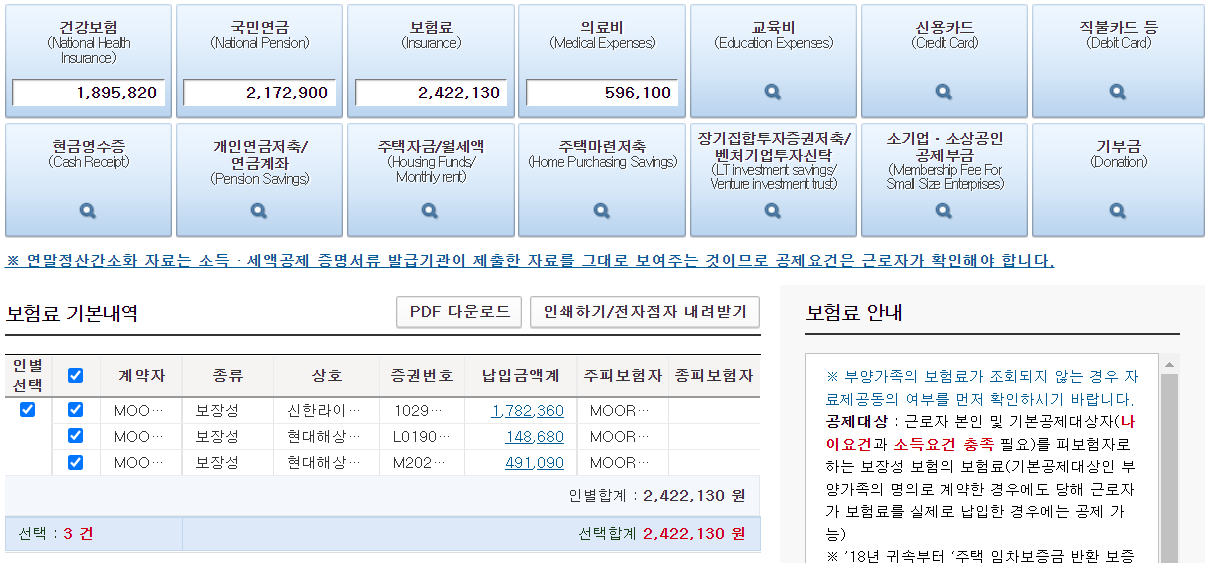
    Most foreign employees use Hometax, the National Tax Service’s online platform.

    The general flow is:

    1. Log in to Hometax
    2. Check your income and deductions via the Simplified Service
    3. Submit documents or consent forms
    4. Your company finalizes the calculation and files the return

    Some companies download employees’ data in bulk (with your consent). Others ask you to download and submit the documents yourself.

    https://centers.ibs.re.kr/img/living_en/overview/tax-file-013.png

    4. Are foreign employees treated the same as Koreans?

    It depends on your tax residency status.

    If you are a Korean tax resident

    You are treated the same as Korean employees for calculation methods.

    You are considered a resident if:

    • you have an address in Korea, or
    • you stayed in Korea 183 days or more in the year

    However, some deductions and special tax rules differ, which is where foreign employees need to pay close attention.


    5. New and important benefits for foreign employees

    (1) Housing savings deduction now available

    From 2025, foreign employees can claim a housing savings deduction (for example, housing subscription savings) if they are the spouse of a non-home-owning household head.

    Previously, foreigners were excluded because they could not be registered as household heads. This rule has now been expanded.

    Conditions:

    • Total annual salary: 70 million KRW or less
    • Tax resident in Korea
    • Spouse of a non-home-owning household head

    Deduction:

    • 40% of the amount paid
    • Up to 3 million KRW per year

    This is a major change for married foreign workers living in Korea.


    (2) Tax reduction for foreign technical professionals

    Foreign employees with specialized qualifications may receive income tax reductions for up to 10 years.

    You may qualify if you:

    • provide technology under an engineering or technology-transfer agreement, or
    • hold a bachelor’s degree or higher in science/engineering with overseas R&D experience

    Benefit:

    • 50% income tax reduction for up to 10 years

    If you work for a designated strategic or specialized company (for materials, parts, or equipment industries), the reduction can be:

    • 70% for the first 3 years

    Highly skilled foreign talent under Korea’s advanced industry talent programs may also apply tax reductions to income received after February 28, 2025.


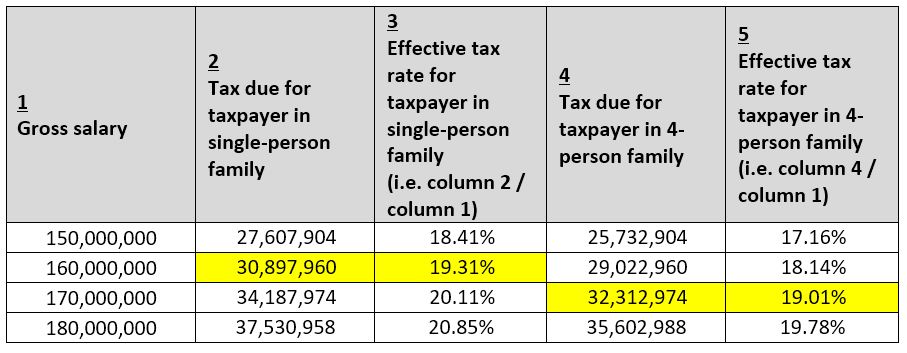
    (3) Optional 19% flat tax for foreign employees

    Foreign employees can choose between:

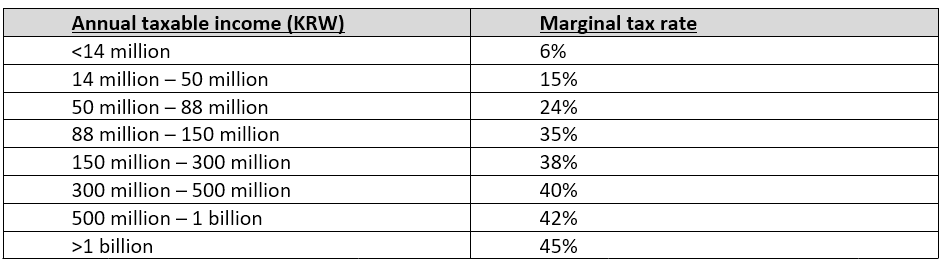
    • the progressive tax rates (6%–45%), or
    • a flat tax rate of 19%, for up to 20 years from their first working year in Korea

    Important points:

    • You must choose one — you cannot mix them
    • If you choose the flat tax, no deductions or tax credits apply
    • Not available if you work for a company in which you own 30% or more shares

    This option can be attractive for high-income earners who do not rely on deductions.


    (4) Income tax exemption for foreign language teachers

    Some foreign teachers may be fully exempt from income tax under tax treaties.

    If:

    • Korea has a tax treaty with your home country, and
    • the treaty includes a teacher or professor exemption clause,

    then income from teaching or research may be exempt for a certain period.

    Treaty rules vary by country, so this must be checked individually.

    https://media.licdn.com/dms/image/v2/D5612AQGXy2zMAtGSRg/article-inline_image-shrink_1000_1488/article-inline_image-shrink_1000_1488/0/1701245091431?e=2147483647&t=oneJkB6chwud5-PhN4o5LakAqEXF9xLtxVuMIrxEjk0&v=beta
    https://media.licdn.com/dms/image/v2/D5612AQGkPvmWl-iaCA/article-inline_image-shrink_1000_1488/article-inline_image-shrink_1000_1488/0/1701245066097?e=2147483647&t=MCA_Kh8SLUDLDurf2G6kyxdNBCxsgNrr49It8DWWBvc&v=beta

    6. What if you are a non-resident?

    Even if you are not a Korean tax resident, you must still settle Korean-source employment income.

    However:

    • Most deductions are not available
    • Family-related deductions and special credits usually do not apply

    In these cases, settlement is simpler but less favorable.


    7. Practical tips for foreign employees

    • Do not assume your company will automatically choose the best tax option for you
    • Compare flat tax vs. progressive tax carefully
    • Check whether you qualify for technical expert reductions
    • Married employees should review housing deductions starting this year
    • Keep records, even if you use the Simplified Service

    The National Tax Service also provides:


    Final thoughts

    Year-end tax settlement in Korea is not just a formality — it’s a chance to recover overpaid taxes or reduce your tax burden, especially if you are a foreign employee with special eligibility.

    The key is understanding which rules apply to you and making informed choices — particularly when it comes to flat tax options and special reductions.

  • The Best Restaurants from Culinary Class Wars in Seoul: Where the White Spoon Chefs Actually Cook

    Netflix’s Culinary Class Wars brings together elite “White Spoon” chefs and rising challengers, showing how creative and competitive Korean cuisine has become. Naturally, many viewers ask:

    Where do these chefs actually cook — and can you eat there?

    Here is a practical guide to the main White Spoon chefs featured on the show, what their restaurants are like, and how much you can expect to spend if you’re planning a special meal in Seoul.


    1. Chef Jun Lee — Soigné (Michelin Two-Star)

    Location: Sinsa-dong, Gangnam
    Michelin: 2 Stars
    Price: Lunch mid-200,000 KRW / Dinner high-300,000 KRW

    Soigné is one of Korea’s most respected fine-dining destinations. Chef Jun Lee builds tasting menus around seasonality and storytelling, creating courses that feel thoughtful and precise. It is considered one of the top fine-dining experiences in the country — but booking requires serious advance planning.


    2. Chef Son Jong-won — Eatanic Garden & L’Amant Secret

    Eatanic Garden (Chosun Palace Hotel, Gangnam)

    Michelin: 1 Star
    Price: Lunch mid-200,000 KRW / Dinner high-300,000 KRW

    A polished, elegant hotel restaurant with refined plates and a luxurious atmosphere. Ideal for travelers looking for a formal dining experience with impressive presentation.

    L’Amant Secret (Hoehyeon / Myeongdong area)

    Michelin: 1 Star
    Price: roughly mid-100,000 to high-200,000 KRW

    A little more approachable in price while still offering sophisticated multi-course menus. A great way to experience Chef Son’s culinary style without the highest tier hotel pricing.


    3. Chef Kim Hee-eun — Soul (Michelin One-Star)

    Location: Haebangchon, Yongsan
    Michelin: 1 Star
    Price: Lunch high-100,000 KRW / Dinner high-200,000 KRW

    Soul helped transform Haebangchon into a serious dining neighborhood. The restaurant reinterprets Korean ingredients in modern, beautifully plated courses. It’s an excellent choice if you want to experience contemporary Korean cuisine rooted in local produce.


    4. Chef Kim Sung-woon — Table For Four

    Location: Hannam-dong
    Michelin: 1 Star
    Price: Lunch mid-100,000 KRW / Dinner mid-200,000 KRW

    Table For Four blends comfort and refinement. The dishes show careful technique while remaining warm and approachable. Because the restaurant is popular and gained even more attention from the show, reservations disappear fast — plan ahead.


    5. Chef Jung Ho-young — Kaden

    Location: Yeonhui-dong
    Price: typically 50,000–150,000 KRW per person

    Kaden is more casual than many fine-dining tasting rooms, which is exactly why people love it. Even before the show, long waits were common. Now, demand is even stronger. Expect satisfying, well-crafted dishes at a friendlier price point than Michelin tasting menus.


    6. Chef Sam Kim — Multiple Italian Restaurants

    Restaurants:
    • Trattoria Sam Kim (Gangnam) — around mid-100,000 KRW
    • Osteria Sam Kim (Mapo) — usually under 100,000 KRW

    Sam Kim is widely known for approachable, flavorful Italian cooking. His restaurants range from casual pasta-friendly spots to more refined courses, making them great options for anyone wanting chef-driven cuisine without ultra-luxury pricing or formality.


    Final Thoughts

    Culinary Class Wars showcases just how diverse Korean dining has become — from Michelin-level tasting menus to creative, accessible restaurants shaped by passionate chefs.

    If you’re planning a food trip to Seoul:

    1. Reserve early (some places book out months in advance).
    2. Consider weekday lunches if dinners are unavailable.
    3. Check price ranges beforehand — tasting menus can run long and feel like an experience rather than a quick meal.